PA6-CF drying and printing
Carbon-fiber-filled nylon 6 is useful for stiff functional prototypes, jigs and fixtures. SUNLU PA6-CF 20% was identified in recovered purchase context. Verify the actual spool label before using this profile; no successful print or tooling-load result was recovered.
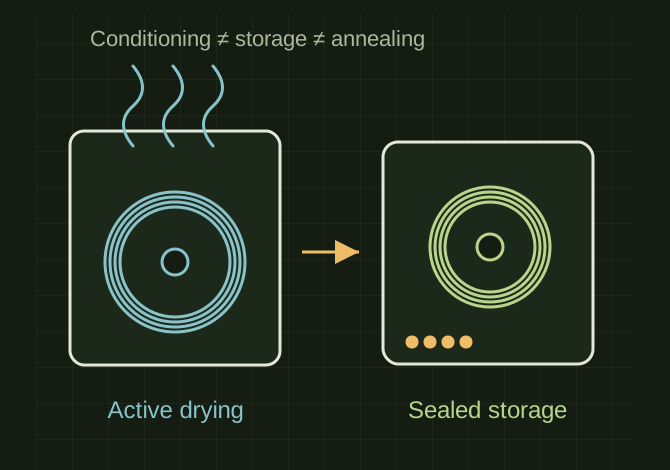
Drying is not storage
 OPEN FULL SIZE ↗
- Material
- PA6-CF; spool label to verify
- Drying
- Manufacturer schedule
- Storage
- Desiccant does not dry a wet spool
TECHNICAL NOTES///
Carbon-fiber-filled nylon 6 is useful for stiff functional prototypes, jigs and fixtures. SUNLU PA6-CF 20% was identified in recovered purchase context. Verify the actual spool label before using this profile; no successful print or tooling-load result was recovered.
GOALRun the first test described in this guide and record the result for pa6-cf drying and printing.
EQUIPMENT
- FDM printer / slicer
- Slicer project
- Calipers or inspection method
MATERIALS
- PA6-CF
STEPS
- Identify the exact spool, then check nozzle, bed, feed-path and drying-temperature compatibility.
- Dry using the applicable manufacturer schedule. Desiccant storage does not replace active drying of a wet spool.
- Print a small bonding/fit coupon, record extrusion quality and measure it after cooling.
- Adjust one variable at a time and save the successful slicer profile with material identity and drying history.
TROUBLESHOOTING
- Popping, foamy extrusion and poor bonding can indicate moisture. Carbon fiber is abrasive, and tiny nozzles can clog. Nylon can change dimensions and stiffness after absorbing moisture. Annealing and final-part conditioning are different from filament drying; remeasure after either. A printed die needs its own load review and guarded test plan; do not infer a gauge or tonnage rating from these settings.
THINGS TO WATCH FOR
Popping, foamy extrusion and poor bonding can indicate moisture. Carbon fiber is abrasive, and tiny nozzles can clog. Nylon can change dimensions and stiffness after absorbing moisture. Annealing and final-part conditioning are different from filament drying; remeasure after either. A printed die needs its own load review and guarded test plan; do not infer a gauge or tonnage rating from these settings.
RESULTConfirm fit and layer bonding on a small sample, and keep the moisture condition consistent between evaluation and use. A high advertised heat-deflection value is not a universal continuous-service temperature.
REFERENCES
. Manufacturer numbers above are product-specific. The coupon geometry and evaluation workflow are proposed starting guidance, not tested results.
DEVELOPMENT HISTORY///
Imported as an independent manifest record; public copy keeps uncertainty visible.
SPECIFICATION///
RELEASED MATERIAL///
Confirm fit and layer bonding on a small sample, and keep the moisture condition consistent between evaluation and use. A high advertised heat-deflection value is not a universal continuous-service temperature.
The record keeps what is known at this revision. Unfinished tests stay unfinished here.