Flexible PLA printing
Flexible PLA is sold for bendable parts that conventional rigid PLA cannot comfortably handle. Possible uses include sleeves, grips, bumpers, and compliant covers. The name does not establish its chemical formulation, hardness, elastic recovery, or equivalence to TPU 95A. Verify whether the spool is actually labeled flexible PLA, TPE, or another flexible blend before assigning a material preset. Do not use high-temperature drying without a product specification. Make two small sleeves with different wall counts: wall thickness often changes perceived flexibility more than a small infill change. Keep spool rotation easy and avoid unnecessary tube bends.
Two sleeves, different wall counts
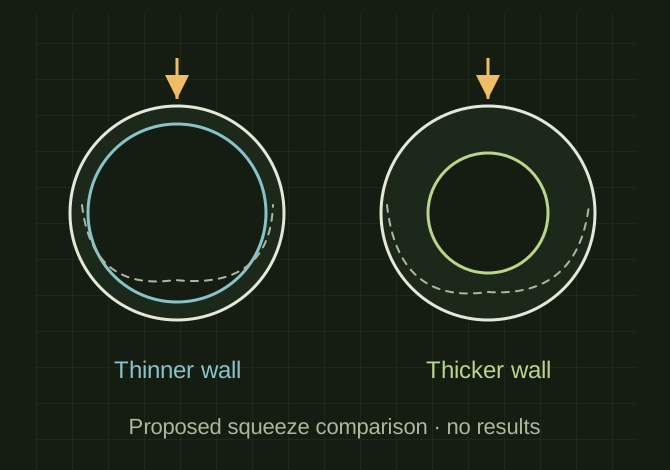 OPEN FULL SIZE ↗
- Test
- Two small sleeves
- Variable
- Wall count
- Observe
- Feeding, recovery and seam tearing
TECHNICAL NOTES///
Flexible PLA is sold for bendable parts that conventional rigid PLA cannot comfortably handle. Possible uses include sleeves, grips, bumpers, and compliant covers. The name does not establish its chemical formulation, hardness, elastic recovery, or equivalence to TPU 95A.
GOALRun the first test described in this guide and record the result for flexible pla printing.
SETTINGS / STARTING POINT
PREPARATION / NOTES
Verify whether the spool is actually labeled flexible PLA, TPE, or another flexible blend before assigning a material preset. Do not use high-temperature drying without a product specification. Make two small sleeves with different wall counts: wall thickness often changes perceived flexibility more than a small infill change. Keep spool rotation easy and avoid unnecessary tube bends.
EQUIPMENT
- FDM printer / slicer
- Slicer project
- Calipers or inspection method
MATERIALS
- PLA
STEPS
- Confirm printer, nozzle, plate, and material identity.
- Start from the recorded profile or the slicer default for that material.
- Print a small first-layer and geometry test before the full part.
- Inspect adhesion, dimensions, surface, supports, and failure mode.
- Save the successful project with temperatures, speeds, and revision notes.
TROUBLESHOOTING
- Soft filament may buckle at the extruder or stretch in a resistant feed path. Excess retraction can worsen jams. Supports can be difficult to remove. More walls and dense infill make a flexible material feel rigid. A soft material can still tear at thin features or layer boundaries.
THINGS TO WATCH FOR
Soft filament may buckle at the extruder or stretch in a resistant feed path. Excess retraction can worsen jams. Supports can be difficult to remove. More walls and dense infill make a flexible material feel rigid. A soft material can still tear at thin features or layer boundaries.
RESULTA short open tube or grip sleeve at 20–30 mm/s. Check feeding, recovery after squeezing, and tearing at the seam.
DEVELOPMENT HISTORY///
Imported as an independent manifest record; public copy keeps uncertainty visible.
SPECIFICATION///
RELEASED MATERIAL///
A short open tube or grip sleeve at 20–30 mm/s. Check feeding, recovery after squeezing, and tearing at the seam.
The record keeps what is known at this revision. Unfinished tests stay unfinished here.