Silk PLA printing
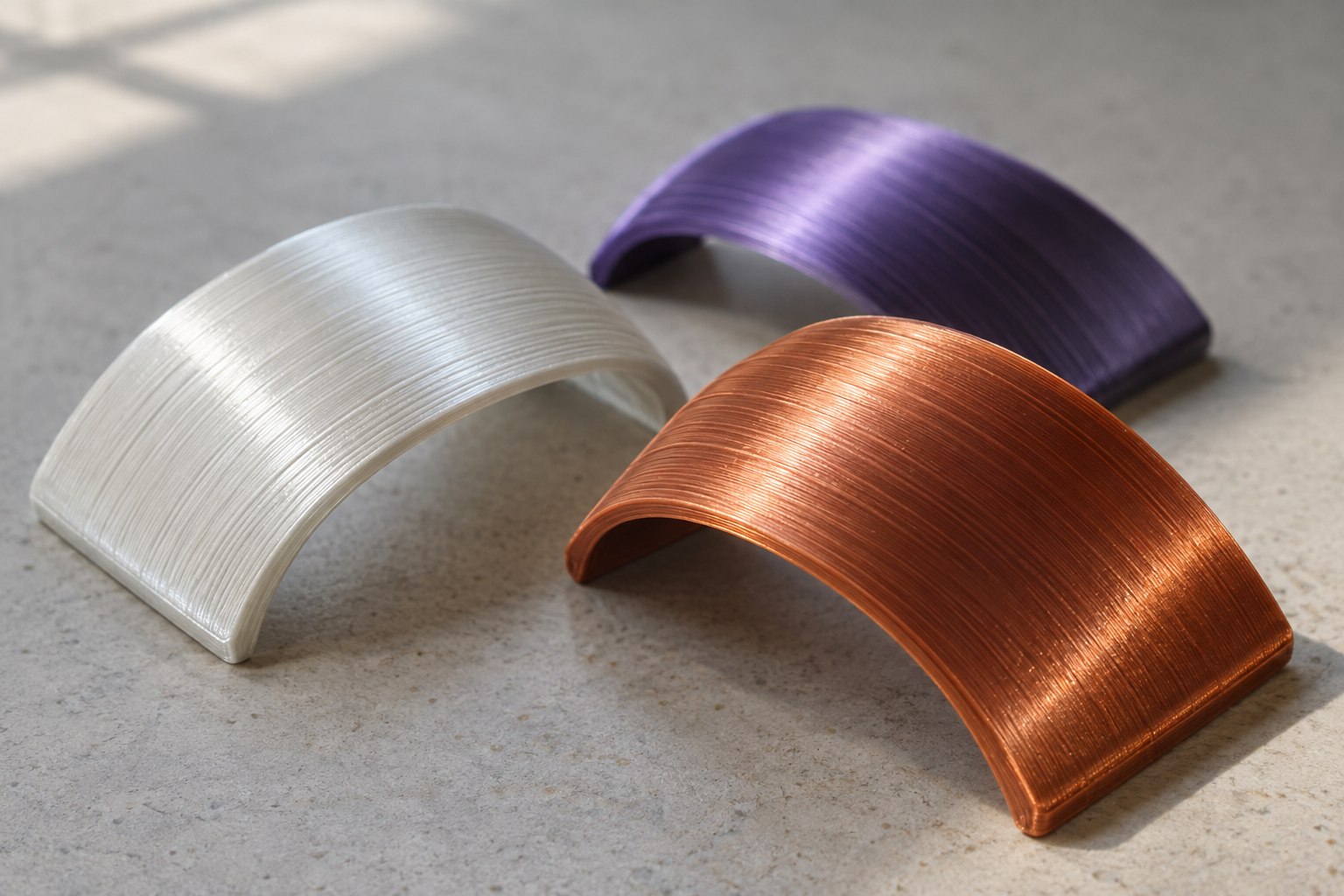
Silk PLA gives decorative prints a reflective, glossy surface. It suits ornaments, display models, badges, and sculptural pieces. Choose it primarily for appearance; do not assume it matches ordinary PLA’s performance in snap fits or loaded parts. Keep external-wall speed consistent for an even sheen. Place the seam on a hidden edge when the model allows. Dry according to the spool specification if extrusion pops or strings heavily. For multi-color silk, orientation can change the apparent color from different viewpoints.
TECHNICAL NOTES///
Silk PLA gives decorative prints a reflective, glossy surface. It suits ornaments, display models, badges, and sculptural pieces. Choose it primarily for appearance; do not assume it matches ordinary PLA’s performance in snap fits or loaded parts.
GOALRun the first test described in this guide and record the result for silk pla printing.
SETTINGS / STARTING POINT
PREPARATION / NOTES
Keep external-wall speed consistent for an even sheen. Place the seam on a hidden edge when the model allows. Dry according to the spool specification if extrusion pops or strings heavily. For multi-color silk, orientation can change the apparent color from different viewpoints.
EQUIPMENT
- FDM printer / slicer
- Slicer project
- Calipers or inspection method
MATERIALS
- PLA
STEPS
- Confirm printer, nozzle, plate, and material identity.
- Start from the recorded profile or the slicer default for that material.
- Print a small first-layer and geometry test before the full part.
- Inspect adhesion, dimensions, surface, supports, and failure mode.
- Save the successful project with temperatures, speeds, and revision notes.
TROUBLESHOOTING
- Changes in temperature, speed, or cooling can produce visible gloss bands. High speed can reduce the intended shine. Small details can soften if printed too hot. Support contact marks are especially visible on glossy surfaces. Weak layer bonding needs a temperature/cooling test, not just more infill.
THINGS TO WATCH FOR
Changes in temperature, speed, or cooling can produce visible gloss bands. High speed can reduce the intended shine. Small details can soften if printed too hot. Support contact marks are especially visible on glossy surfaces. Weak layer bonding needs a temperature/cooling test, not just more infill.
RESULTA small curved sample at 25 and 40 mm/s outer-wall speed; compare appearance and layer strength.
REFERENCES
, . Conservative speeds above target finish rather than maximum advertised throughput.
DEVELOPMENT HISTORY///
Imported as an independent manifest record; public copy keeps uncertainty visible.
SPECIFICATION///
RELEASED MATERIAL///
A small curved sample at 25 and 40 mm/s outer-wall speed; compare appearance and layer strength.
The record keeps what is known at this revision. Unfinished tests stay unfinished here.