Sheet-metal setup and press-brake analyzer
Prepare consistent sheet-metal data, then compare the part to a defined brake and tooling setup. Work on a copy first. Record application version, units and active document/configuration. Names below identify the catalogued workflow; they do not claim a particular button layout or verified implementation.
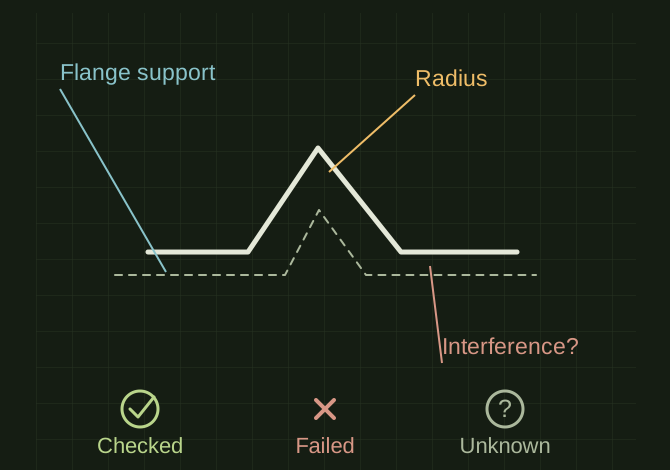
Geometry, tooling and load each need a check
 OPEN FULL SIZE ↗
- Inputs
- Actual material, thickness and bend geometry
- Check
- Tooling limits and validated force method
- Report
- Assumptions and unknowns
TECHNICAL NOTES///
Prepare consistent sheet-metal data, then compare the part to a defined brake and tooling setup.
GOALRun the first test described in this guide and record the result for sheet-metal setup and press-brake analyzer.
PREPARATION / NOTES
Work on a copy first. Record application version, units and active document/configuration. Names below identify the catalogued workflow; they do not claim a particular button layout or verified implementation.
EQUIPMENT
- CAD / automation tool
- Representative test model
- Measurement or inspection method
STEPS
- Read actual material, thickness, bend radii, angles and flange lengths from the model.
- Select the intended machine/tooling set and its documented limits.
- Check unfolding, minimum flange support, interference and estimated force using a validated process method.
- Report assumptions and unknown checks alongside results, then review the forming sequence with the shop.
TROUBLESHOOTING
- A geometric pass does not establish a safe setup. Force estimates depend on process and bend length, and machine limits do not certify a printed tool.
SAFETY / LIMITS
- Use qualified judgment and current manufacturer or code guidance for safety-critical work.
THINGS TO WATCH FOR
A geometric pass does not establish a safe setup. Force estimates depend on process and bend length, and machine limits do not certify a printed tool.
RESULTThe report explains why each bend passes, fails or remains unverified.
DEVELOPMENT HISTORY///
Imported as an independent manifest record; public copy keeps uncertainty visible.
SPECIFICATION///
RELEASED MATERIAL///
The report explains why each bend passes, fails or remains unverified.
The record keeps what is known at this revision. Unfinished tests stay unfinished here.