Material library and gauge-table tools
Separate physical material definitions from sheet-metal gauge rules and shop naming. Work on a copy first. Record application version, units and active document/configuration. Names below identify the catalogued workflow; they do not claim a particular button layout or verified implementation.
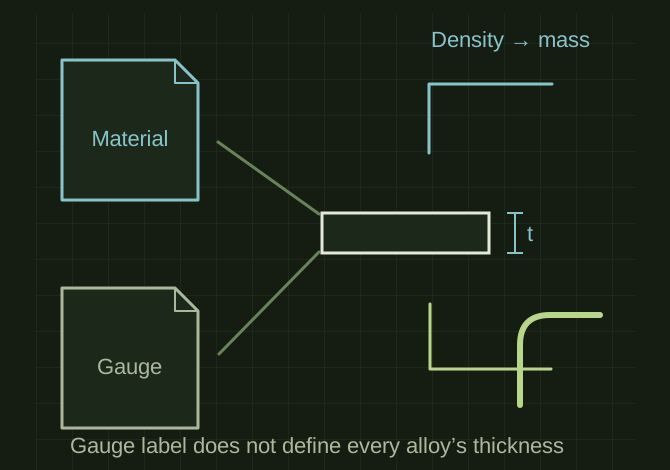
Material, gauge label and thickness are different data
 OPEN FULL SIZE ↗
- Separate
- Physical material / gauge rule / naming
- Verify
- Thickness with explicit units
- Caution
- Gauge systems differ by alloy
TECHNICAL NOTES///
Separate physical material definitions from sheet-metal gauge rules and shop naming.
GOALRun the first test described in this guide and record the result for material library and gauge-table tools.
PREPARATION / NOTES
Work on a copy first. Record application version, units and active document/configuration. Names below identify the catalogued workflow; they do not claim a particular button layout or verified implementation.
EQUIPMENT
- CAD / automation tool
- Representative test model
- Measurement or inspection method
STEPS
- Select the approved material library entry and record its source/revision.
- Map the material and gauge label to actual thickness with explicit units.
- Apply the appropriate bend/gauge rule and rebuild the part.
- Check mass, thickness, bend settings and downstream descriptions against the source.
TROUBLESHOOTING
- Gauge numbers are not universal across alloys. Material density alone does not define bend behavior. Missing library paths must produce an error rather than a silent substitute.
THINGS TO WATCH FOR
Gauge numbers are not universal across alloys. Material density alone does not define bend behavior. Missing library paths must produce an error rather than a silent substitute.
RESULTA known sample produces the expected thickness, material name and mass order of magnitude.
DEVELOPMENT HISTORY///
Imported as an independent manifest record; public copy keeps uncertainty visible.
SPECIFICATION///
RELEASED MATERIAL///
A known sample produces the expected thickness, material name and mass order of magnitude.
The record keeps what is known at this revision. Unfinished tests stay unfinished here.