U225XTHE RECORD REMAINSSEARCH
← RETURN TO INDEX
RECORD LOCATED / 2026.09.01

Filet mignon rare-to-medium-rare workflow

For a thick filet, use a measured center temperature and controlled sear rather than minutes per side alone. Technique reference reflecting the requested doneness preference, with the official minimum stated explicitly.

FOOD-031REV A
AI narration using Robert's voice. Filet mignon rare-to-medium-rare workflow / short introduction.
Open notebook ↗
A CLOSER LOOK

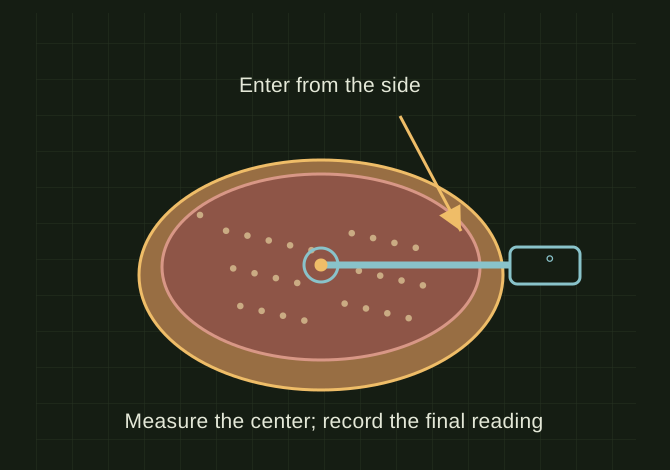
Read the center of a thick filet

A steak cross-section distinguishes seared edge from center; a probe tip is at the center. No color or timer is used as a safety conclusion.OPEN FULL SIZE ↗
Illustration of a thermometer entering a thick steak from its side.Explanatory drawing based on this record
Placement
Enter from the side into the center
Record
Final temperature and rest
Source distinction
Culinary rare differs from USDA guidance
CLASSIFICATIONFOOD
STATUSStarting Point
MATERIALKITCHEN / RECIPE
DISPOSITIONPUBLIC / STARTING POINT
VIEW FILE ↗

A RECIPE TO MAKEADDED TO THIS RECORD

A complete stovetop method for thick filet, including the original doneness preference and USDA's recommended endpoint.

Added . This recipe addition is separate from the original notes below; it is not a claim of a tested batch.

Pan-seared thick filet mignon

New matching stovetop recipe adapted from CHAT-0119's thick, refrigerator-cold filet workflow and FOOD-031's temperature discussion; measured batch and complete method are newly assembled.

YIELD
2 servings
PREP / WAIT
10 minutes
COOK
About 12–22 minutes, plus at least 3 minutes resting

Ingredients

  • 2 whole-cut filet mignon steaks, 6–8 oz each and 1 1/2–2 inches thick
  • 3/4 tsp fine salt
  • 1/2 tsp black pepper
  • 1 tbsp neutral high-heat oil
  • 2 tbsp unsalted butter
  • 2 garlic cloves, lightly crushed (optional)
  • 2 thyme sprigs (optional)

Method

  1. Pat refrigerator-cold steaks thoroughly dry and season with salt and pepper. Heat a heavy skillet over medium-high for about 3 minutes; add oil. A numbered stove dial is only a starting point, so reduce heat if the oil smokes heavily.
  2. Sear the first side 2–3 minutes, then the second side 2–3 minutes. Use tongs to brown the edges briefly.
  3. Reduce to medium-low. Add butter, optional garlic and thyme. Flip every 45–60 seconds, spooning butter over the steaks; keep the butter from burning.
  4. Begin checking the center from the side after 4 minutes at lower heat. Continue in 1-minute intervals. For the USDA safety-standard version, reach 145°F before removing from heat and rest at least 3 minutes.
  5. Optional rare-to-medium-rare preference branch: these temperatures are below USDA's recommendation and carry increased risk. For a desired final center of 120–125°F (rare) or 130–135°F (medium-rare), stop the low-heat cooking roughly 5°F short of that chosen range, then rest 5–10 minutes and measure again. Carryover varies; the final thermometer reading, not the clock or assumed rise, describes the doneness. Choose the 145°F plus three-minute-rest method for the safety-standard version.
  6. Serve after the selected resting step with the pan butter. Thickness, pan and starting temperature control cooking time.

Notes & storage

  • The original preference was rare to medium-rare. Culinary final temperatures of about 120–125°F for rare and 130–135°F for medium-rare are below USDA's 145°F plus three-minute-rest recommendation and carry greater foodborne-illness risk; these are preference references, not safety endpoints.
  • Use package directions for injected or mechanically tenderized beef. This card assumes an intact, unstuffed whole-cut steak.
  • Refrigerate leftovers promptly at 40°F or below for 3–4 days; reheat to 165°F.

TECHNICAL NOTES///

For a thick filet, use a measured center temperature and controlled sear rather than minutes per side alone.

ORIGINAL RECORD / RETAINED NOTESCooking / recipe

GOALRun the first test described in this guide and record the result for filet mignon rare-to-medium-rare workflow.

PREPARATION / NOTES

Technique reference reflecting the requested doneness preference, with the official minimum stated explicitly.

INGREDIENTS

  • Exact quantities were not preserved in the manifest entry; add the recovered batch sheet when available.

STEPS

  • For 1 1/2–2 inch steaks, pat dry and season with salt and pepper. Heat an oven to 250°F and place steaks on a rack over a pan.
  • Warm gently until approaching the intended finish, then sear in a hot lightly oiled skillet, turning to brown both sides and edges.
  • Check the center from the side with an instant-read thermometer and account for carryover during a 5–10 minute rest.
  • For culinary doneness references, rare is commonly about 120–125°F final and medium-rare about 130–135°F final. USDA’s safer whole-cut minimum is 145°F with a 3-minute rest; choose that endpoint for the safety-standard version.

TROUBLESHOOTING

  • Rare and medium-rare endpoints are below USDA guidance and carry increased risk, especially for vulnerable people. Mechanically tenderized/injected steaks require their labeled cooking directions. Thickness and starting temperature change timing.

SAFETY / LIMITS

  • Treat this as a public recipe note, not a substitute for current food-safety guidance.

THINGS TO WATCH FOR

Rare and medium-rare endpoints are below USDA guidance and carry increased risk, especially for vulnerable people. Mechanically tenderized/injected steaks require their labeled cooking directions. Thickness and starting temperature change timing.

RESULTRecord actual final temperature after resting; do not judge doneness solely by color.

DEVELOPMENT HISTORY///

2026.09.01Rev A

Imported as an independent manifest record; public copy keeps uncertainty visible.

SPECIFICATION///

TypeKitchen / recipe
SourceRecovered notes and content manifest
ValidationNext test should record batch, temperature, time, and result

RELEASED MATERIAL///

food-031-public-summary.txtPUBLIC SUMMARY / RECOVERED NOTES
WHERE THIS STANDS

Record actual final temperature after resting; do not judge doneness solely by color.

The record keeps what is known at this revision. Unfinished tests stay unfinished here.
RECORD FOOD-031DISPOSITION / PUBLIC / STARTING POINTBUILD 0.4.17