U225XTHE RECORD REMAINSSEARCH
← RETURN TO INDEX
RECORD LOCATED / 2026.09.01

Alternate saved Tender Quick jerky revision

Preserve the recovered flavor difference while replacing an incomplete cure/heat process with a usable, clearly identified alternative. Recovered: two marinade ratios only. New uncured method supplied so the article is usable without inventing the missing cure formula.

FOOD-012REV A
AI narration using Robert's voice. Alternate saved Tender Quick jerky revision / short introduction.
Open notebook ↗
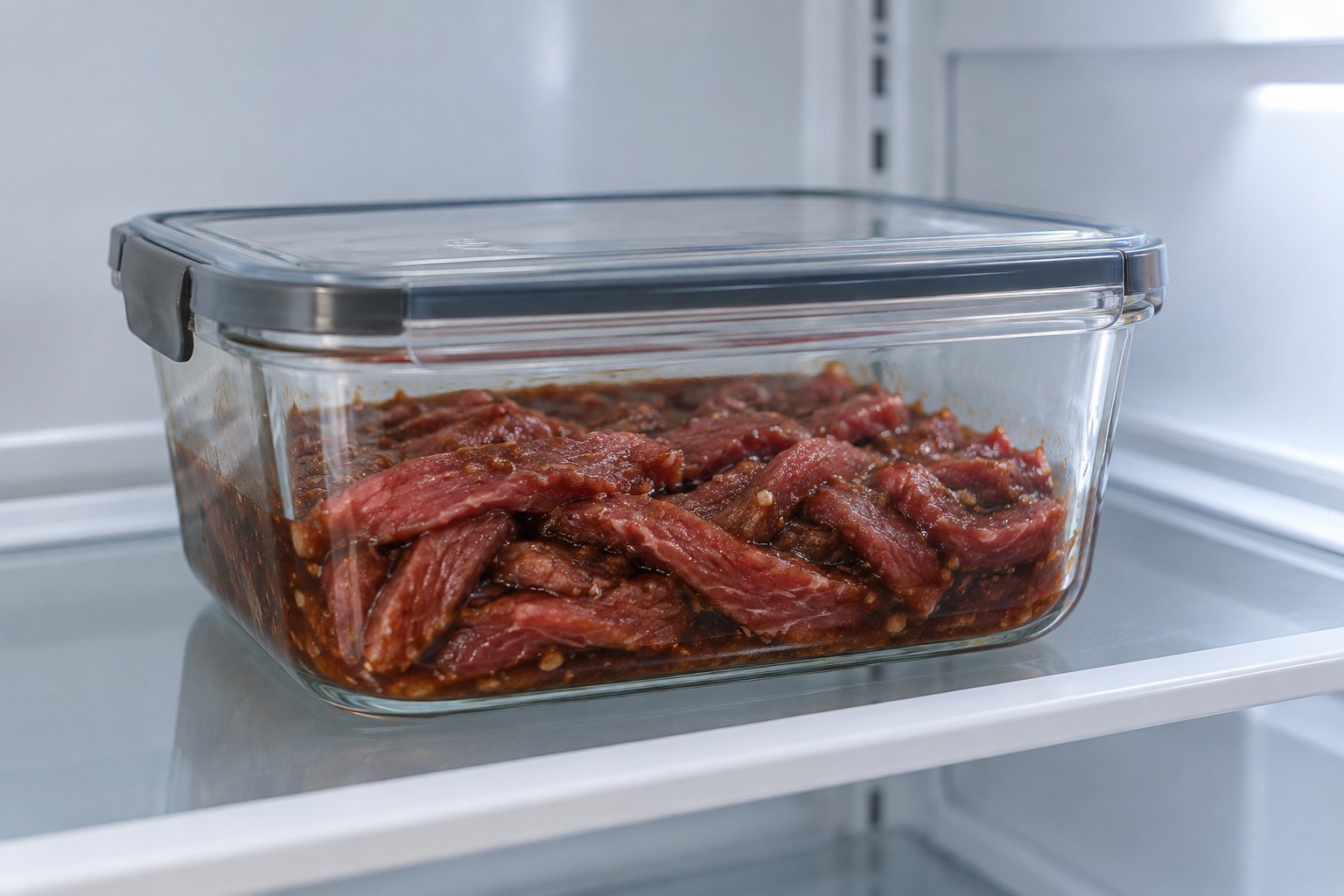
Thin beef strips coated in dark marinade sit in a lidded glass container on a refrigerator shelf.
Illustration of thin beef strips in a covered container during refrigerated marination.AI-generated illustration
CLASSIFICATIONFOOD
STATUSRecovered/Partial
MATERIALKITCHEN / RECIPE
DISPOSITIONPUBLIC / RECOVERED/PARTIAL
VIEW FILE ↗

A RECIPE TO MAKEADDED TO THIS RECORD

The historical Tender Quick amounts and flavor notes remain unchanged. This separately labeled uncured alternative supplies the missing moist heating, complete drying and conservative cold-storage process; it is not the cured favorite.

Added . This recipe addition is separate from the original notes below; it is not a claim of a tested batch.

Peppery beef jerky with an optional hot-smoke finish — uncured

New uncured adaptation of the recovered Worcestershire, soy and pepper flavor profile. The original Tender Quick recipe remains a separate historical record. Moist preheating and conservative cold storage are added; this is not presented as Robert-tested or as a validated shelf-stable cured product.

YIELD
About 8–12 oz finished jerky from 2 lb beef; actual yield varies
PREP / WAIT
20 minutes plus 8–12 hours refrigerated marinating
COOK
About 20–35 minutes heating/smoking, then 3–8 hours or longer drying

Ingredients

  • 2 lb very lean beef, such as eye of round, with visible fat removed
  • 3 tablespoons Worcestershire sauce
  • 2 tablespoons soy sauce
  • 2 teaspoons coarse black pepper
  • 2 teaspoons crushed red pepper flakes
  • 1 teaspoon garlic powder
  • 1 teaspoon onion powder
  • 1/2 teaspoon smoked paprika
  • 1/4 teaspoon cayenne pepper; use 1/2 teaspoon for a hotter batch
  • 2 cups water for the boiling step, plus more only as needed to cover the strips

Method

  1. Trim off visible fat. Slice chilled beef across the grain into even 1/8–3/16-inch strips, never thicker than 1/4 inch. Wash hands and clean utensils after handling raw meat.
  2. Mix the Worcestershire, soy sauce and all marinade seasonings. Add the beef, turn to coat, cover and refrigerate at 40°F or below for 8–12 hours. This is an uncured recipe: add no Tender Quick, Cure #1, Cure #2 or unidentified pink salt.
  3. Before drying, put the meat and its marinade in a saucepan. Add the measured water and, if needed, more water just to cover the strips; work in batches rather than crowding the pan. Bring to a full boil, then boil 5 minutes, stirring to separate the strips. Check several of the thickest strips with a thin-tip thermometer: they must reach 160°F. Continue heating if needed. Discard the cooking liquid after use.
  4. For real smoke flavor, immediately transfer the hot cooked strips to clean racks in a smoker already holding 225°F. Leave gaps between strips and smoke with mild cooking wood for 15–30 minutes, watching thin pieces closely. This short hot-smoking stage is optional; the smoked paprika supplies flavor when it is skipped.
  5. Move the strips directly to a preheated dehydrator at 140°F in a single layer. Use a separate thermometer to check drying temperature. Begin checking cooled samples after about 3 hours, then every 30–60 minutes; drying can take 3–8 hours or longer with thicker pieces or a full machine. Do not use the clock as the endpoint.
  6. A cooled strip should be leathery, with fibers separating when bent and no soft wet center. Remove finished pieces individually. Let the finished batch cool briefly on clean racks, then package in small portions and refrigerate at 40°F or below within 2 hours of leaving the heat.
  7. For this new recipe, use refrigerated jerky within 3–4 days or freeze portions promptly for longer keeping. This deliberately conservative plan makes no room-temperature storage or vacuum-sealed shelf-life claim.

Notes & storage

  • A 160°F dehydrator setting, cured color, smoke exposure or a bend test does not establish that the meat reached its required internal heating temperature. Complete the moist heating step before drying.
  • This recipe is for a new batch of lean beef. It does not provide a way to rescue meat that was previously held at unsafe temperatures, and it is not a process for poultry, ground meat or wild game.
  • Optional dry finish for this 2-lb raw-meat batch: toss the still-warm finished jerky with 1/4 teaspoon coarse black pepper and 1/8 teaspoon garlic powder from clean containers. Add no cure and no raw-meat marinade. Storage stays the same.

TECHNICAL NOTES///

Preserve the recovered flavor difference while replacing an incomplete cure/heat process with a usable, clearly identified alternative.

ORIGINAL RECORD / RETAINED NOTESCooking / recipe

GOALRun the first test described in this guide and record the result for alternate saved tender quick jerky revision.

PREPARATION / NOTES

Recovered: two marinade ratios only. New uncured method supplied so the article is usable without inventing the missing cure formula.

INGREDIENTS

  • Meat and seasoning quantities require the recovered batch sheet.
  • Curing product identity must remain explicit.

STEPS

  • For 2 lb thin-sliced lean beef, the recovered alternate flavor amounts are 3 tablespoons Worcestershire and 2 tablespoons soy sauce; the older note used 2 and 1 tablespoons respectively.
  • For a new uncured version, add 1 teaspoon black pepper, 1 teaspoon garlic powder and optional 1/4–1/2 teaspoon cayenne. Marinate refrigerated, then follow FOOD-014 for the heat and drying process.
  • If specifically making cured jerky, use an intact tested Tender Quick whole-muscle jerky recipe and its exact cure amount/time. Do not infer cure dosage from the flavor amounts.
  • Label the saved version and record meat weight, thickness, heat endpoint and drying outcome.

TROUBLESHOOTING

  • Tender Quick and Cure #1 are different products and cannot be swapped spoon-for-spoon. The recovered flavor ratios do not establish a complete validated cured-jerky recipe. Do not retain “150–165°F until bendable” as the sole safety instruction.

SAFETY / LIMITS

  • Treat this as a public recipe note, not a substitute for current food-safety guidance.

THINGS TO WATCH FOR

Tender Quick and Cure #1 are different products and cannot be swapped spoon-for-spoon. The recovered flavor ratios do not establish a complete validated cured-jerky recipe. Do not retain “150–165°F until bendable” as the sole safety instruction.

RESULTThe website distinguishes recovered flavor notes from the new uncured method and links to the full safety process.

DEVELOPMENT HISTORY///

2026.09.01Rev A

Imported as an independent manifest record; public copy keeps uncertainty visible.

SPECIFICATION///

TypeKitchen / recipe
SourceRecovered notes and content manifest
ValidationNext test should record batch, temperature, time, and result
FocusCure identity, thickness, internal temperature, and texture

RELEASED MATERIAL///

food-012-public-summary.txtPUBLIC SUMMARY / RECOVERED NOTES
WHERE THIS STANDS

The website distinguishes recovered flavor notes from the new uncured method and links to the full safety process.

The record keeps what is known at this revision. Unfinished tests stay unfinished here.
RECORD FOOD-012DISPOSITION / PUBLIC / RECOVERED/PARTIALBUILD 0.4.17