Stock and flat-pattern size properties
Report stock dimensions from a defined geometry state and orientation. Work on a copy first. Record application version, units and active document/configuration. Names below identify the catalogued workflow; they do not claim a particular button layout or verified implementation.
Measured bounds and stock allowance differ
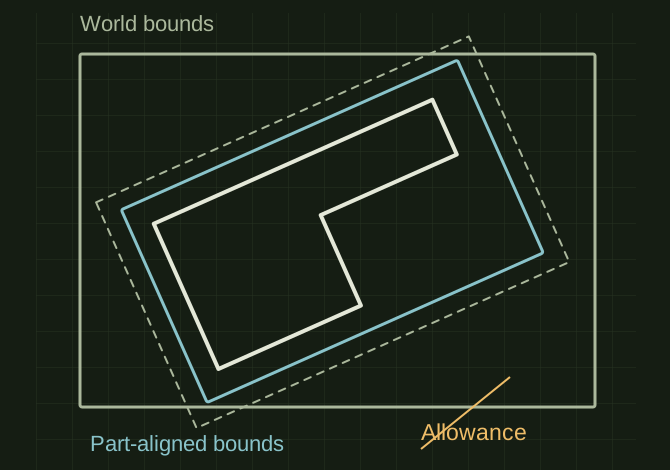 OPEN FULL SIZE ↗
- Define
- Geometry state and orientation
- Separate
- Measured dimension / allowance
- Verify
- Units and manual measurement
TECHNICAL NOTES///
Report stock dimensions from a defined geometry state and orientation.
GOALRun the first test described in this guide and record the result for stock and flat-pattern size properties.
PREPARATION / NOTES
Work on a copy first. Record application version, units and active document/configuration. Names below identify the catalogued workflow; they do not claim a particular button layout or verified implementation.
EQUIPMENT
- CAD / automation tool
- Representative test model
- Measurement or inspection method
STEPS
- Identify whether the record needs raw-stock size, folded bounds or flat-pattern extents.
- Update the relevant geometry and measure in the approved coordinate system.
- Convert to the requested units and apply the documented rounding or stock allowance separately from the measured dimension.
- Write clearly named properties and compare them to a manual measurement.
TROUBLESHOOTING
- Axis-aligned bounds can grow when a part rotates. Nominal stock allowance is not actual geometry. Do not mix inches and centimeters in API-derived values.
THINGS TO WATCH FOR
Axis-aligned bounds can grow when a part rotates. Nominal stock allowance is not actual geometry. Do not mix inches and centimeters in API-derived values.
RESULTThe property labels make measured size and purchase allowance distinguishable.
DEVELOPMENT HISTORY///
Imported as an independent manifest record; public copy keeps uncertainty visible.
SPECIFICATION///
RELEASED MATERIAL///
The property labels make measured size and purchase allowance distinguishable.
The record keeps what is known at this revision. Unfinished tests stay unfinished here.