Galaxy S24 Ultra photogrammetry
Use the phone as a consistent camera for overlapping photographs, with scale added from a measured reference.
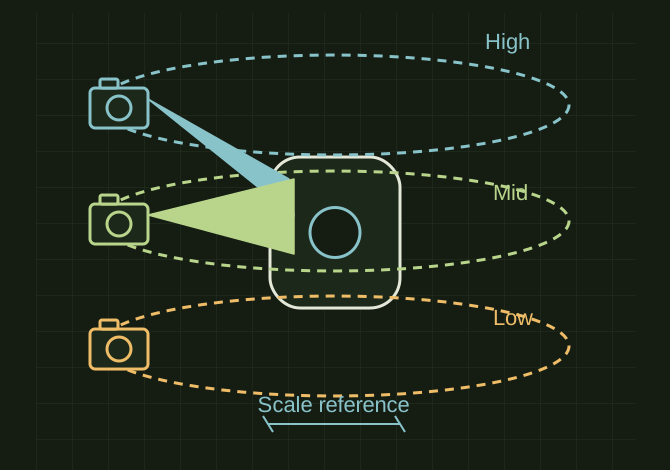
Three camera rings, one fixed reference
 OPEN FULL SIZE ↗
- Camera
- One lens and consistent zoom
- Coverage target
- Roughly 70–80% overlap
- Scale
- Measured reference
TECHNICAL NOTES///
Use the phone as a consistent camera for overlapping photographs, with scale added from a measured reference.
GOALRun the first test described in this guide and record the result for galaxy s24 ultra photogrammetry.
EQUIPMENT
- Scanner / mesh workflow
- Representative test model
- Measurement or inspection method
STEPS
- Use one lens and a consistent zoom setting; avoid switching lenses around the object. Prefer sharp, evenly exposed still photos.
- Place a textured matte object under diffuse light and include a known scale reference without moving it relative to the object.
- Capture overlapping rings at low, middle and high angles, roughly 70–80% overlap as a starting acquisition target.
- Process a small subset first, inspect alignment and then reconstruct the full set. Check scale and trim background afterward.
TROUBLESHOOTING
- Reflective, transparent or textureless objects can fail even with high-resolution images. Portrait blur, digital zoom and motion blur hurt reconstruction. A photograph-derived model has no guaranteed metric scale by itself.
THINGS TO WATCH FOR
Reflective, transparent or textureless objects can fail even with high-resolution images. Portrait blur, digital zoom and motion blur hurt reconstruction. A photograph-derived model has no guaranteed metric scale by itself.
RESULTMost cameras align and the scaled model agrees with an independent measurement.
DEVELOPMENT HISTORY///
Imported as an independent manifest record; public copy keeps uncertainty visible.
SPECIFICATION///
RELEASED MATERIAL///
Most cameras align and the scaled model agrees with an independent measurement.
The record keeps what is known at this revision. Unfinished tests stay unfinished here.