Kansas farm-pond tactics
Pond fishing works best when you know its stocking, cover and oxygen condition rather than assuming every pond holds the same fish. Tactics are starting approaches, not a live bite report. Check current access, posted restrictions, species limits, bait rules, weather and water advisories for the exact water before a trip.
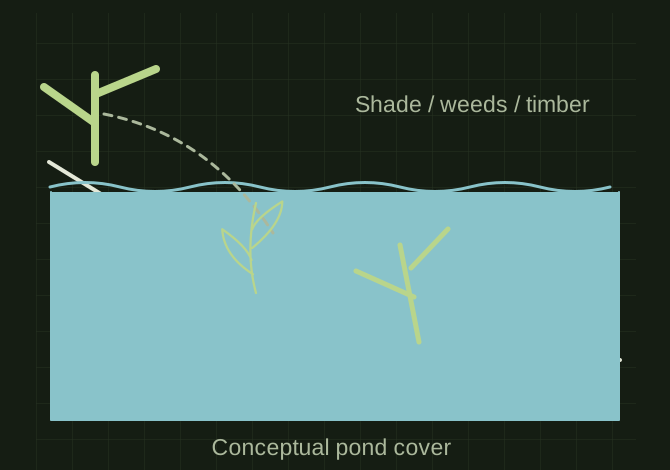
Read the cover in a small pond
 OPEN FULL SIZE ↗
- Before fishing
- Landowner permission
- Cover
- Shade, weeds and timber
- Observe
- Species and water condition
TECHNICAL NOTES///
Pond fishing works best when you know its stocking, cover and oxygen condition rather than assuming every pond holds the same fish.
GOALRun the first test described in this guide and record the result for kansas farm-pond tactics.
PREPARATION / NOTES
Tactics are starting approaches, not a live bite report. Check current access, posted restrictions, species limits, bait rules, weather and water advisories for the exact water before a trip.
EQUIPMENT
- Rod and reel matched to the target species
- Hooks, line, sinkers, and landing tools
- Notebook or phone field log
MATERIALS
- Bait or lure identified in the next field log
STEPS
- Get landowner permission and ask about species, recent catches, livestock access and any management concerns.
- Start quietly along shaded banks, weeds, timber or the first depth change.
- For bass, work a weedless bait past cover; for panfish, use a small worm piece; for channel cats, try worms or fresh legal cut bait near a feeding edge.
- Change depth or bank position when bites stop and keep disturbance low.
TROUBLESHOOTING
- Do not transfer baitfish or release unwanted fish into the pond. In hot stagnant water, surface gulping can indicate an oxygen problem rather than feeding activity.
THINGS TO WATCH FOR
Do not transfer baitfish or release unwanted fish into the pond. In hot stagnant water, surface gulping can indicate an oxygen problem rather than feeding activity.
RESULTIdentify the productive species/habitat pattern and leave gates and property as the owner requests.
DEVELOPMENT HISTORY///
Imported as an independent manifest record; public copy keeps uncertainty visible.
SPECIFICATION///
RELEASED MATERIAL///
Identify the productive species/habitat pattern and leave gates and property as the owner requests.
The record keeps what is known at this revision. Unfinished tests stay unfinished here.