Blue-catfish identification
Use fin structure and several body traits; color alone is unreliable. Tactics are starting approaches, not a live bite report. Check current access, posted restrictions, species limits, bait rules, weather and water advisories for the exact water before a trip.
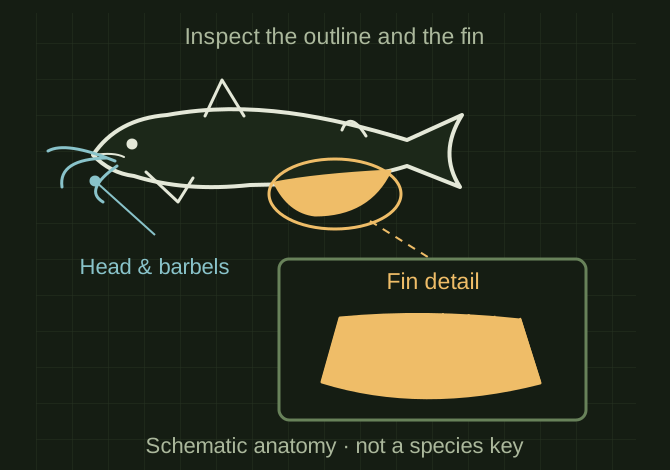
The anal fin is a useful identification view
 OPEN FULL SIZE ↗
- Inspect
- Anal-fin outline and rays
- Compare
- Head, body and spotting
- If uncertain
- Document visible anatomy
TECHNICAL NOTES///
Use fin structure and several body traits; color alone is unreliable.
GOALRun the first test described in this guide and record the result for blue-catfish identification.
PREPARATION / NOTES
Tactics are starting approaches, not a live bite report. Check current access, posted restrictions, species limits, bait rules, weather and water advisories for the exact water before a trip.
EQUIPMENT
- Rod and reel matched to the target species
- Hooks, line, sinkers, and landing tools
- Notebook or phone field log
MATERIALS
- Bait or lure identified in the next field log
STEPS
- Look at the anal fin’s outline and ray count with the fish supported and handled carefully.
- Kansas describes blue catfish as having 30 or more anal-fin rays; channel cats generally have fewer and a more rounded anal-fin edge.
- Compare head/body shape and spotting as supporting clues, not the sole identification.
- If uncertain, photograph the side and spread anal fin quickly, then release rather than applying an uncertain harvest identification.
TROUBLESHOOTING
- Juveniles, lighting and water color can mislead. Do not infer sex from size or body color. Keep hands clear of fin spines.
THINGS TO WATCH FOR
Juveniles, lighting and water color can mislead. Do not infer sex from size or body color. Keep hands clear of fin spines.
RESULTThe identification is based on visible anatomical evidence and current species-specific regulations.
DEVELOPMENT HISTORY///
Imported as an independent manifest record; public copy keeps uncertainty visible.
SPECIFICATION///
RELEASED MATERIAL///
The identification is based on visible anatomical evidence and current species-specific regulations.
The record keeps what is known at this revision. Unfinished tests stay unfinished here.