Washer-Water Container / A Controlled Outlet
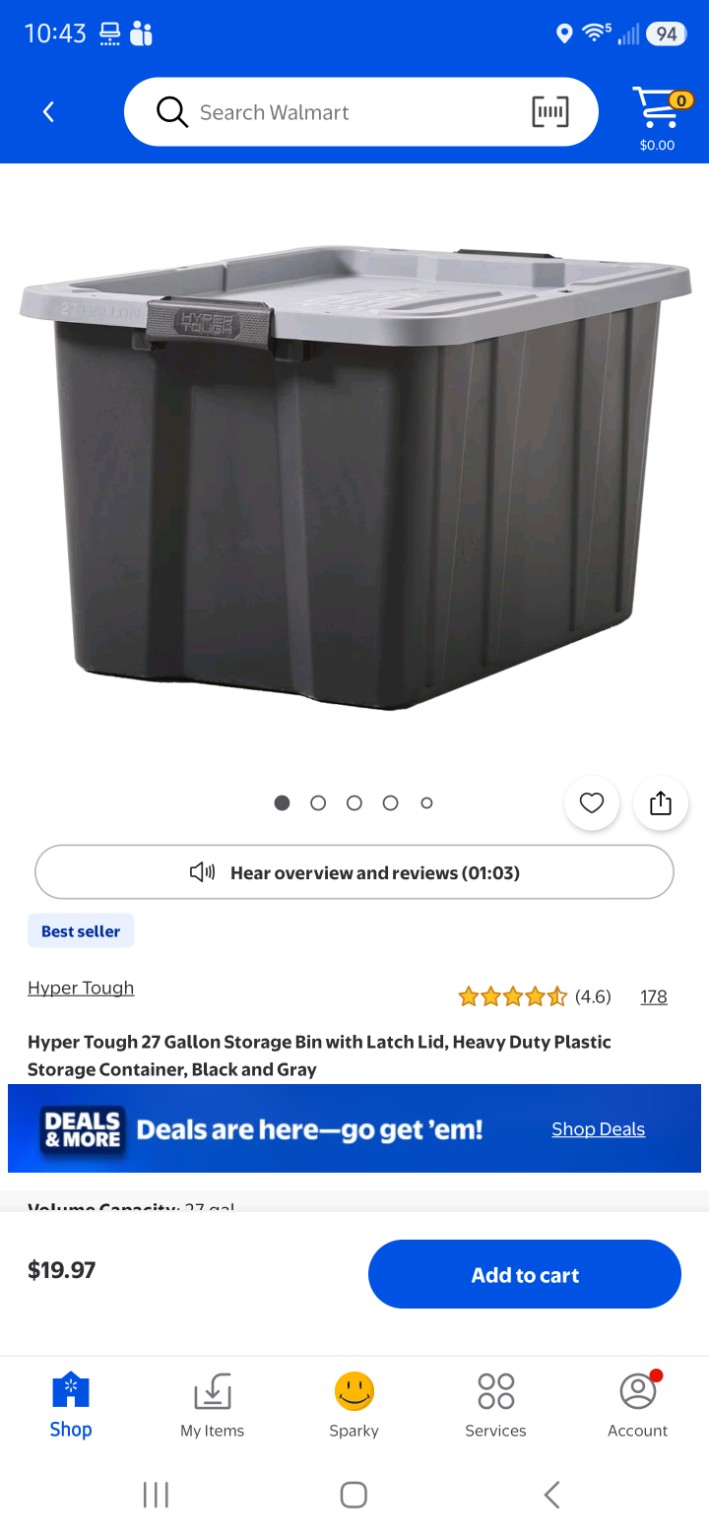
I asked how to make water release slowly from the container collecting discharge from my washer, and said I was willing to drill it. The reference image showed a 27-gallon storage bin. The discussion proposed a bulkhead fitting, valve, and hose at a low sidewall location. No installation or flow test followed in the recovered conversation, so this record captures the concept and the conditions that must be established before it becomes a working drainage arrangement.
 EXP-WATER-RELEASE-001
TECHNICAL NOTES///
A container was already collecting washer water. The next question was how to let it out slowly, leading to an adjustable outlet proposal and a short list of site measurements still needed.
This started as a question about a container already collecting washer water. The wish was simple: make it release water slowly, with drilling available as an option.
The supplied image was a product page for a 27-gallon storage bin. It identifies the kind of container under discussion, but it is not a photograph of the installation and does not verify a liquid-storage rating. The actual support beneath the bin, the washer connection, and the receiving drain were not shown.
The suggested concept was a bulkhead fitting through a low, flat sidewall area, followed by a valve and an outlet hose. A valve would allow adjustment and access for cleaning instead of committing to a permanent pattern of small holes. The 3/4-inch size mentioned in the conversation was a proposed nominal fitting size, not a tested flow specification.
If the concept is developed, the fitting has to be chosen before a hole is sized. The manufacturer's installation drawing determines the required cutout, gasket arrangement, compatible wall thickness, and tightening procedure. Banjo's bulkhead guidance specifically distinguishes the fitting's nominal size from its required hole and warns against overtightening plastic fittings. Those details cannot be settled from the storage-bin screenshot.
The proposed valve belongs at the collection container's outlet. It was not a proposal to throttle the washer's discharge hose. The washer's own installation manual still governs hose routing and drainage requirements; manufacturer drainage guidance treats hose position and blockages as causes of drainage trouble. No universal hose height is assigned here because the washer model was not recorded.
A gravity outlet also depends on where the water is going. The discussion assumed a receiving drain below the container outlet, but the drain's location and elevation were never established. Neither the allowable destination nor its capacity was confirmed. That unresolved site information prevents this sketch of an idea from being presented as a finished plumbing plan.
The useful next result would be measured behavior: how much water arrives during each discharge, how fast the outlet releases it, how much free capacity remains before the next discharge, and whether fittings and the supported container remain leak-free through a whole wash-and-rinse cycle. The original suggestion was to observe that entire cycle. No such test was reported, so the project remains a proposal rather than an unattended-use setup.
DEVELOPMENT HISTORY///
The user described collecting washer water and asked for a slow-release modification, supplying a storage-bin product image.
Published the outlet proposal with the missing site information and test results made explicit.
SPECIFICATION///
RELEASED MATERIAL///
The collection use was reported and an outlet concept was suggested. The recovered conversation contains no drilled container, installed fitting, confirmed drainage route, or measured operating result.
The record keeps what is known at this revision. Unfinished tests stay unfinished here.