Copper-to-PEX conversion plan
Plan a potable-water transition around the specific tubing and fitting system, then verify the installed joints before concealment.
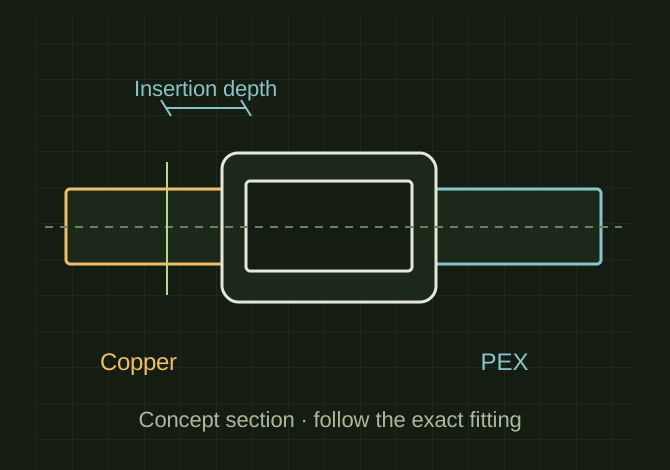
A transition fitting joins two tubing systems
 OPEN FULL SIZE ↗
- Existing
- Copper
- Transition
- Compatible listed fitting
- New
- Correct PEX connection system
TECHNICAL NOTES///
Plan a potable-water transition around the specific tubing and fitting system, then verify the installed joints before concealment.
GOALRun the first test described in this guide and record the result for copper-to-pex conversion plan.
EQUIPMENT
- Basic inspection tools
- Service information for the exact model
- Notebook or photo record
STEPS
- Map the lines, shutoffs, pipe size, access and hot/cold service conditions. Check applicable local requirements and any grounding/bonding implications before replacing copper.
- Choose compatible listed fittings and the correct PEX connection system; do not mix crimp, expansion and push-fit assumptions.
- Shut off and relieve pressure, cut square, deburr copper and mark the exact fitting’s insertion depth. Assemble according to its manufacturer’s instructions.
- Support tubing, protect it from abrasion/UV/heat and perform the required leak/pressure test before closing the wall.
TROUBLESHOOTING
- Insertion depths differ by fitting generation. A fitting that feels attached may not be fully seated. Do not improvise compressed-air testing unless the system manufacturer and local requirements allow it.
SAFETY / LIMITS
- Use qualified judgment and current manufacturer or code guidance for safety-critical work.
THINGS TO WATCH FOR
Insertion depths differ by fitting generation. A fitting that feels attached may not be fully seated. Do not improvise compressed-air testing unless the system manufacturer and local requirements allow it.
RESULTAll joints remain dry under the prescribed test and the installed route can move thermally without rubbing.
DEVELOPMENT HISTORY///
Imported as an independent manifest record; public copy keeps uncertainty visible.
SPECIFICATION///
RELEASED MATERIAL///
All joints remain dry under the prescribed test and the installed route can move thermally without rubbing.
The record keeps what is known at this revision. Unfinished tests stay unfinished here.