Arrange parts efficiently while preserving manufacturing constraints that a geometry nest may not know.
PUBLIC KNOWLEDGE VIEWCAD / Scanning / Automation / how-to
SOURCE STATENew reference guidance; not a recovered test result
GOALRun the first test described in this guide and record the result for deepnest/svgnest nesting concept.
EQUIPMENT
CAD / automation tool
Representative test model
Measurement or inspection method
STEPS
Prepare clean closed outlines and confirm units using a known square.
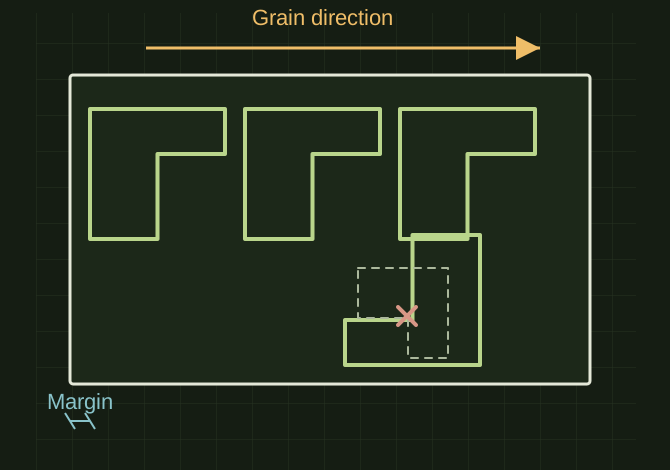
Define stock boundaries, quantities, edge margins, part spacing and allowed rotations; preserve grain direction where required.
Run the nest and inspect small internal parts, shared edges and narrow scrap bridges.
Export, reopen in CAM and regenerate/review kerf compensation, leads and cut order separately.
TROUBLESHOOTING
A compact nest is not automatically machine-ready. Common-line cutting can change compensation and heat behavior. Conversions between DXF and SVG can change scale.
THINGS TO WATCH FOR
A compact nest is not automatically machine-ready. Common-line cutting can change compensation and heat behavior. Conversions between DXF and SVG can change scale.
RESULTPart counts, dimensions and process clearances survive export and the CAM review passes.
 OPEN FULL SIZE ↗