Hollow 3D-printed fishing lures
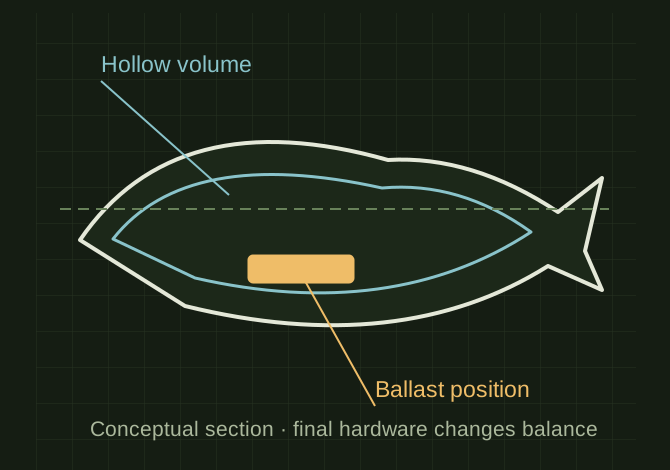
A hollow lure lets you tune buoyancy, ballast and action. The useful design variables are body volume, hardware mass and where that mass sits. These are prototype geometry and print starting points, not a recovered lure STL or a confirmed successful profile.
Where the lure carries its mass
 OPEN FULL SIZE ↗
- Variables
- Body volume / hardware mass / ballast position
- Test
- Final hardware in a clear container
- Record
- Attitude and dry weight before/after soak
TECHNICAL NOTES///
A hollow lure lets you tune buoyancy, ballast and action. The useful design variables are body volume, hardware mass and where that mass sits.
GOALRun the first test described in this guide and record the result for hollow 3d-printed fishing lures.
PREPARATION / NOTES
These are prototype geometry and print starting points, not a recovered lure STL or a confirmed successful profile.
EQUIPMENT
- FDM printer / slicer
- Slicer project
- Calipers or inspection method
MATERIALS
- Material requires confirmation
STEPS
- Sketch the intended action: floating, suspending or sinking. Weigh hooks, rings, ballast and the printed body rather than estimating from appearance.
- Design two accessible shells or a body with a sealable ballast port. Use a mechanically continuous hook/line load path where feasible; do not rely on a tiny printed eye for an unknown fish load.
- As a prototype, use 0.4 mm nozzle, 0.20 mm layers and 3–4 walls in a suitable material. Design the cavity in CAD and inspect the slicer preview so “0% infill” does not leave unsupported internal roofs.
- Assemble and seal using 3DP-043. Test in a clear container with the final hardware, then make a shallow-water retrieve test and adjust one ballast variable at a time.
TROUBLESHOOTING
- Use hook covers while handling. More ballast can ruin action; leaks can masquerade as a balance problem. Printed shells and adhesives need testing before any claimed load rating.
THINGS TO WATCH FOR
Use hook covers while handling. More ballast can ruin action; leaks can masquerade as a balance problem. Printed shells and adhesives need testing before any claimed load rating.
RESULTRecord floating attitude, sink rate, retrieve action and dry weight before/after soaking.
DEVELOPMENT HISTORY///
Imported as an independent manifest record; public copy keeps uncertainty visible.
SPECIFICATION///
RELEASED MATERIAL///
Record floating attitude, sink rate, retrieve action and dry weight before/after soaking.
The record keeps what is known at this revision. Unfinished tests stay unfinished here.