Printed tooling for 16–10 gauge sheet
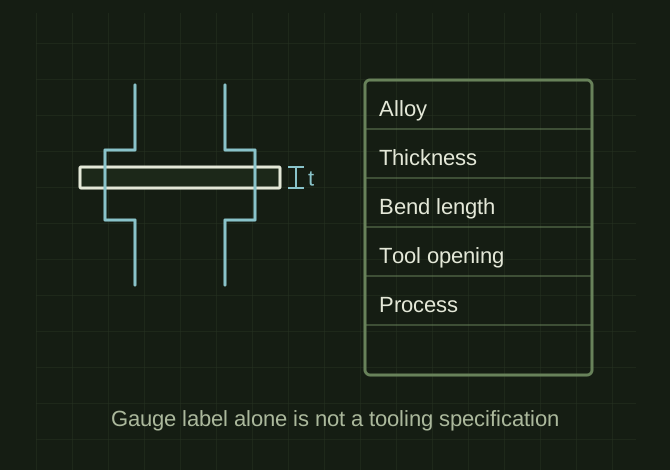
This is a comparison and test-planning reference for sheet thicknesses discussed as 16 through 10 gauge. Gauge alone is not a sufficient tooling specification.
Gauge is only one input
 OPEN FULL SIZE ↗
- Topic
- 16–10 gauge discussion
- Required
- Material plus measured thickness
- Capacity
- Only documented tested cases
TECHNICAL NOTES///
This is a comparison and test-planning reference for sheet thicknesses discussed as 16 through 10 gauge. Gauge alone is not a sufficient tooling specification.
GOALRun the first test described in this guide and record the result for printed tooling for 16–10 gauge sheet.
EQUIPMENT
- FDM printer / slicer
- Slicer project
- Calipers or inspection method
MATERIALS
- Material requires confirmation
STEPS
- Record the actual material and thickness in inches or millimeters; steel, stainless and aluminum gauge systems are not interchangeable.
- Create a matrix with bend length, V-opening, punch radius, bend angle and process type for each intended job.
- Obtain force estimates from the machine/tooling supplier or a validated shop method, then separately assess the printed tool’s supported structure and failure modes.
- Document only the load cases actually tested under approved conditions. Store force, springback, visible damage, dimensional drift and life observations per revision.
TROUBLESHOOTING
- Do not publish a claim such as “prints bend 10 gauge” without the material, geometry and validated evidence. Short coupons do not establish full-width capacity; hemming and bottoming must be evaluated separately.
THINGS TO WATCH FOR
Do not publish a claim such as “prints bend 10 gauge” without the material, geometry and validated evidence. Short coupons do not establish full-width capacity; hemming and bottoming must be evaluated separately.
RESULTA complete matrix shows untested cases explicitly and never extrapolates a safe rating from infill percentage.
DEVELOPMENT HISTORY///
Imported as an independent manifest record; public copy keeps uncertainty visible.
SPECIFICATION///
RELEASED MATERIAL///
A complete matrix shows untested cases explicitly and never extrapolates a safe rating from infill percentage.
The record keeps what is known at this revision. Unfinished tests stay unfinished here.