Venona: Messages That Opened Decades Later
Analysts worked for decades on Soviet messages whose encryption had been weakened by reused key material. The recovered fragments exposed espionage while leaving a record that still requires careful interpretation of names and roles.
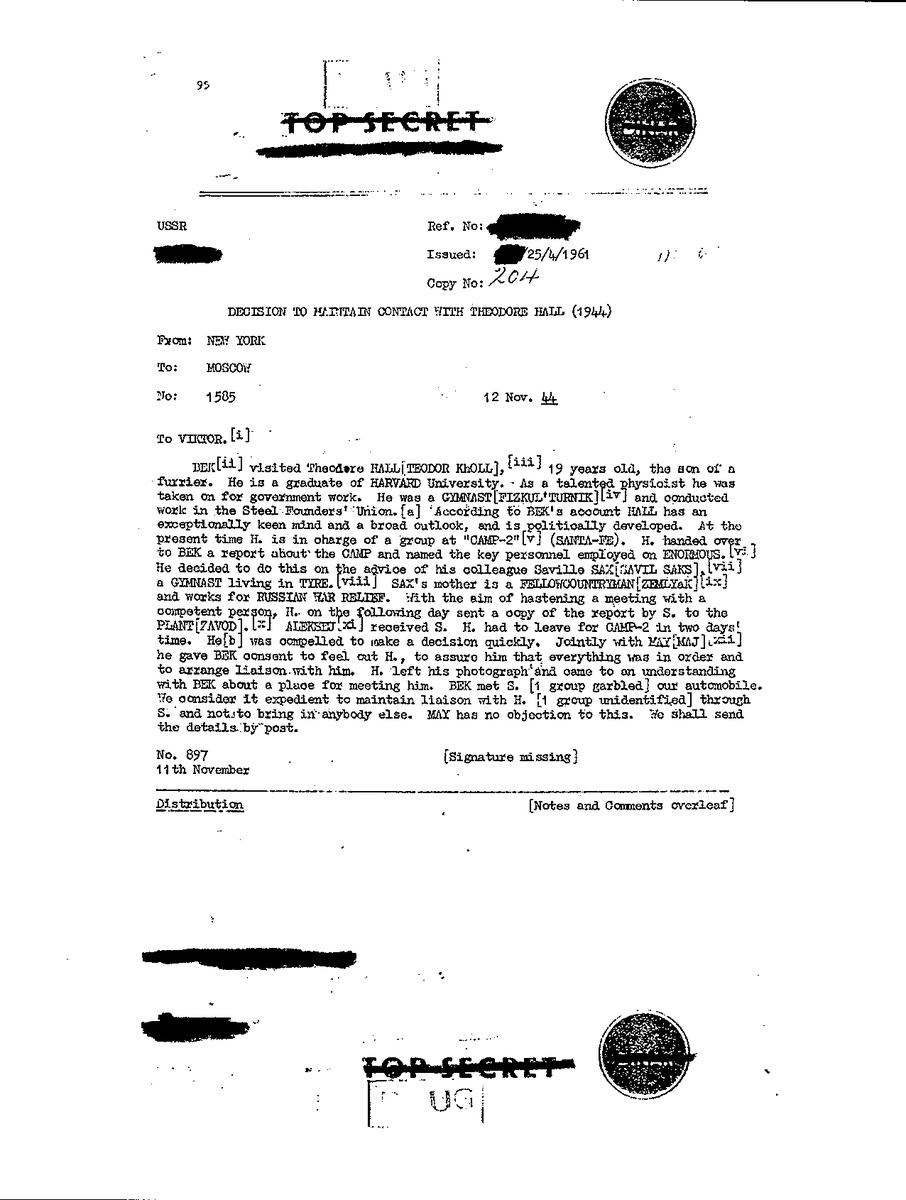
The account
A secret message can outlive the confidence of the person who sent it. Beginning in 1943, American analysts examined accumulated Soviet communications in the program later called Venona. What initially looked like diplomatic traffic also contained espionage. The work continued long after many of the messages were old. Words and identities emerged slowly, turning an archive of unreadable signals into a delayed window on hidden wartime relationships.
Following the trail
The NSA's history explains that reused pages from one-time pads weakened encryption that would otherwise have resisted this attack. Only portions of the intercepted traffic were recovered, and public releases began in 1995. The history also cautions that code names could refer to ordinary public figures as well as intelligence personnel and sources. Being mentioned in an espionage message is not, by itself, proof that someone was a spy.
Why it stays with us
Venona contains two kinds of secrecy: the original Soviet traffic and the concealed Western effort to read it. Its revelations arrived on different timelines for investigators and the public. The patient, partial nature of the work makes the record more interesting than an all-revealing codebook: some doors opened, others remained shut, and every decoded reference still needed a human context.