Operation Fortitude: An Army Built from Signals
Dummy equipment, controlled agents and false radio traffic encouraged Germany to expect an invasion near Calais. The fictitious force helped conceal the real Normandy landings and prolonged uncertainty after they began.
The account
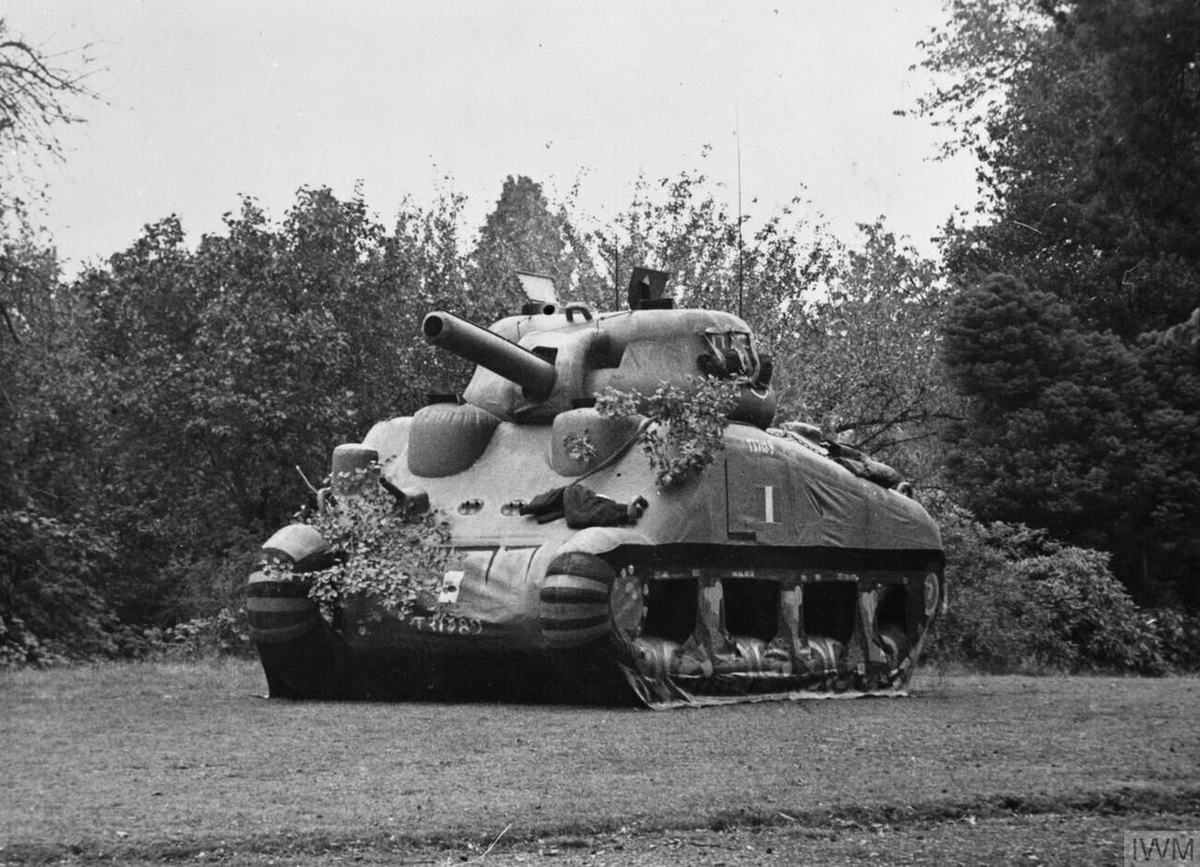
Before D-Day, an army gathered in southeast England that existed chiefly for an enemy's imagination. Operation Fortitude South helped present the First United States Army Group as a force preparing to cross toward the Pas-de-Calais. Dummy vehicles and landing craft gave aerial observers something to see. False radio traffic and carefully managed agent reports gave listeners something to hear. Together they made an absent army seem to have weight, routine and intention.
Following the trail
English Heritage traces Fortitude South within the wider Bodyguard deception. Its purpose was to reinforce German expectations of a major Calais landing and encourage the belief that Normandy was a diversion. The account documents fabricated equipment, a nominal force associated with George Patton and controlled intelligence channels. This was a real coordinated deception, not evidence that the actual Normandy invasion or the soldiers fighting there were fictitious.
Why it stays with us
The operation did not require every observer to see everything. It needed different fragments to agree when assembled: a vehicle here, a transmission there, a trusted report confirming the outline. That is the eerie achievement of the phantom army. People could make rational inferences from a collection of observations while the collection itself had been deliberately arranged to mislead them.