The Man in the Iron Mask: A Name Kept Out of the Register
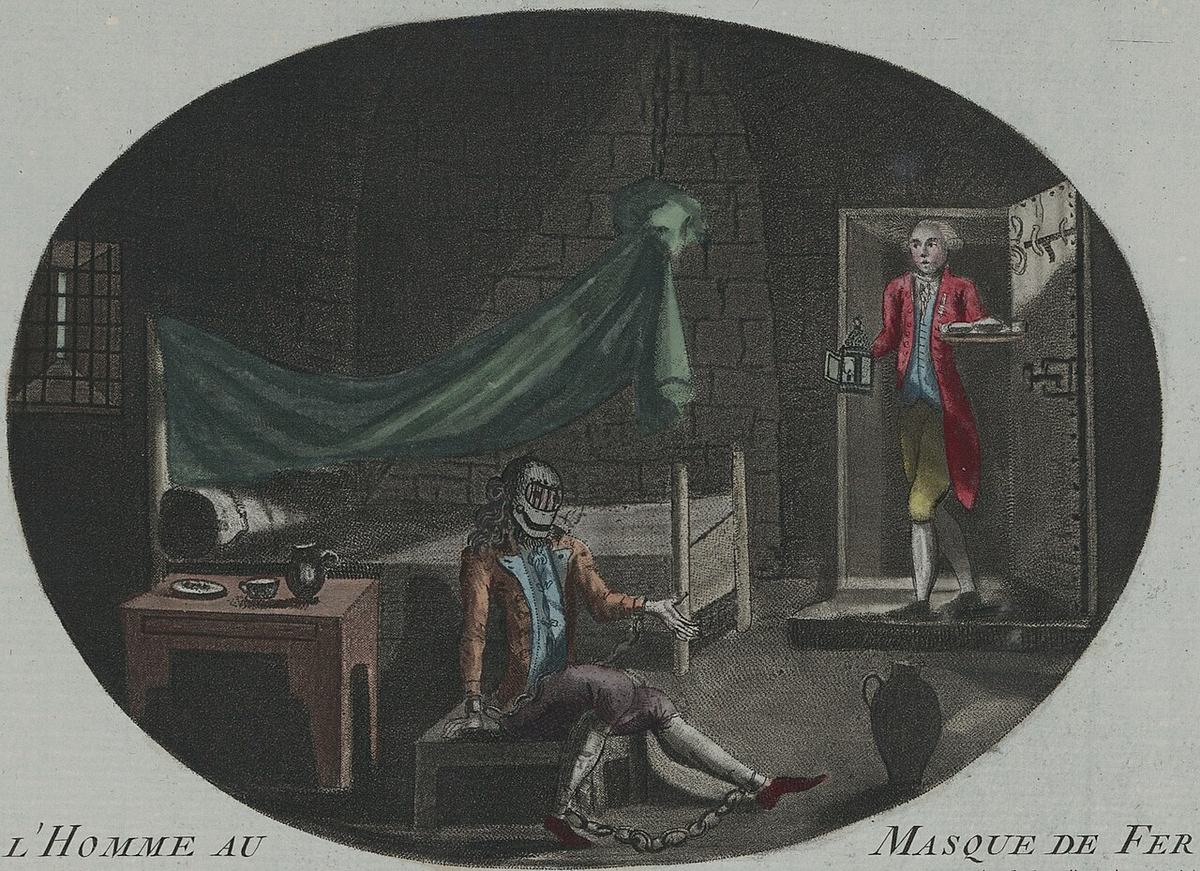
A masked prisoner moved with his jailer and died in the Bastille without his identity becoming public. Later storytelling hardened a likely velvet mask into iron and supplied royal secrets.
The account
When the governor Saint-Mars arrived at the Bastille in 1698, he brought a prisoner whose name was concealed and whose face was covered. The man died there in 1703. That much was enough to launch an extraordinary afterlife. An unknown captive under Louis XIV could be made to bear almost any secret, especially one involving the crown. The mask turned the simple absence of a name into a visible act of suppression.
Following the trail
The historical record summarized in the 1911 Encyclopaedia Britannica draws on the Bastille journal of Étienne du Junca. It distinguishes the recorded masked prisoner from later elaboration and notes that contemporary evidence points to black velvet rather than iron. Numerous identities have been proposed. The existence of a guarded prisoner is established more firmly than the royal-twin narratives made famous by later literature.
Why it stays with us
The name survives as a paradox: everyone recognizes a man defined by being unrecognized. Even the material of his mask changed as the story traveled, becoming a more dramatic symbol of coercion. The unanswered identity remains compelling, but the uncertainty should be preserved rather than filled with a novelist's solution and presented as a recovered state secret.