The Babington Plot: A Cipher with Another Reader
A coded plot to replace Elizabeth I with Mary, Queen of Scots was read by the queen's intelligence network. Secret correspondence became evidence against the people who believed the symbols protected them.
The account
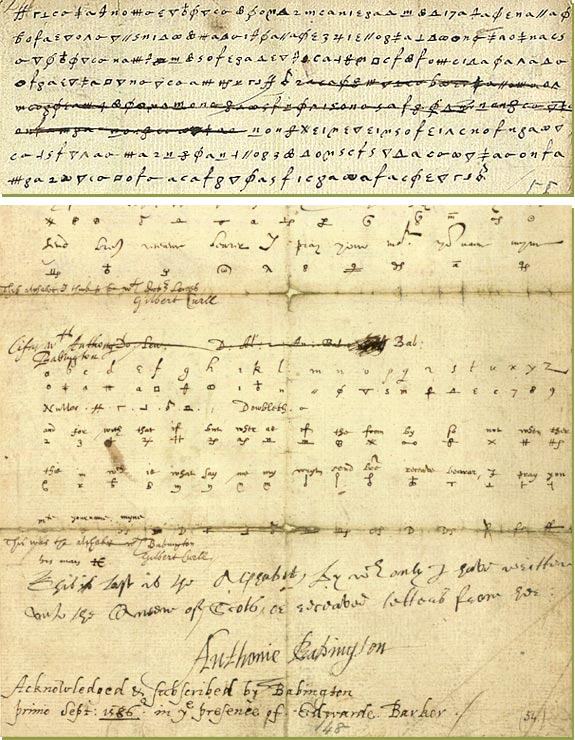
Anthony Babington's 1586 conspiracy aimed to remove Elizabeth I and place Mary, Queen of Scots on the English throne. The scheme moved through secret correspondence, where names and words could disappear behind symbols. To the sender, a cipher promised control over who could read a message. To Francis Walsingham's intelligence workers, it offered another kind of opportunity: a conspirator might explain more when convinced that nobody else could understand.
Following the trail
The National Archives preserves a cipher key associated with Mary and explains that more than a hundred ciphers were found among her seized papers. Walsingham employed codebreakers including Thomas Phelippes and John Sommers. Archival interpretation connects intercepted correspondence with the Babington investigation. The surviving materials establish a real plot and intelligence operation; details in dramatizations should be checked against the actual letters and records.
Why it stays with us
The frightening object is a message that has already been read before it reaches the person meant to receive it. The symbols still look secret, but their protection has collapsed. This is a conspiracy whose participants mistook a communication system for a private room, while an unseen reader stood inside it and waited for enough words to be written.