Dragsholm’s White Lady in the Wall
Dragsholm’s White Lady is said to wander a castle whose walls once confined her. A modern heritage retelling places the legend around the middle of the sixteenth century.
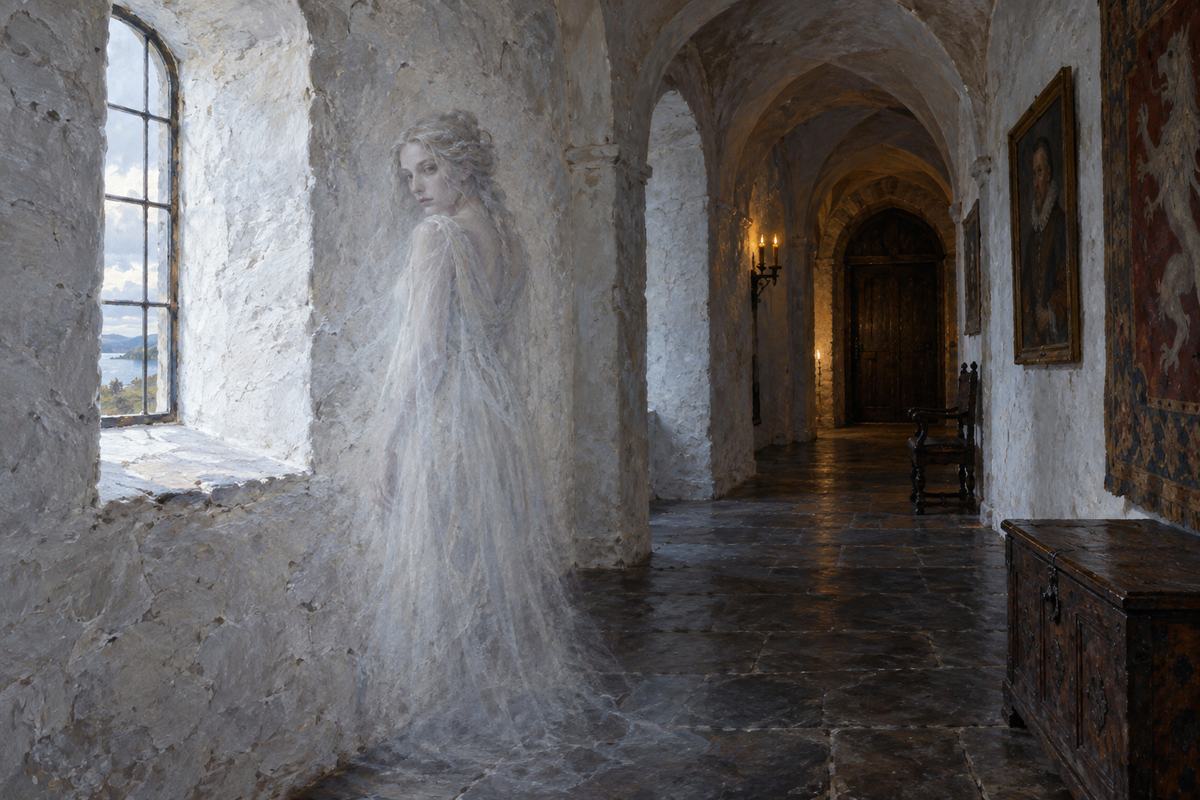
The account
Dragsholm’s White Lady story makes the wall itself the frightening object. The tradition says a woman was sealed alive in the castle masonry around 1550 and later returned as a wandering apparition. A visitor looking at a thick old wall can no longer see only structure: the tale suggests a room too narrow to be a room, and a person excluded from the visible household. Her white clothing gives the later apparition a recognisable form, but the hidden space remains the story’s most oppressive feature.
Following the trail
VisitDenmark’s Fairytale Denmark guide recounts this as part of Dragsholm’s haunting reputation. It does not identify an original witness, provide a contemporary imprisonment record or document an archaeological discovery establishing the story. The castle’s long history is real; the guide’s brief ghost narrative is evidence that the tradition is told, rather than evidence that its punishment happened.
Why it stays with us
The legend changes the meaning of a castle interior. Corridors and rooms are only the spaces people can enter. It asks what the building might be concealing in the solid places between them, without giving a reliable answer.