La Llorona’s Question in the Dark
A woman in white asks a night watchman the time, then cries for her children. One old collected version lets La Llorona appear in impossibly distant places at once.
The account
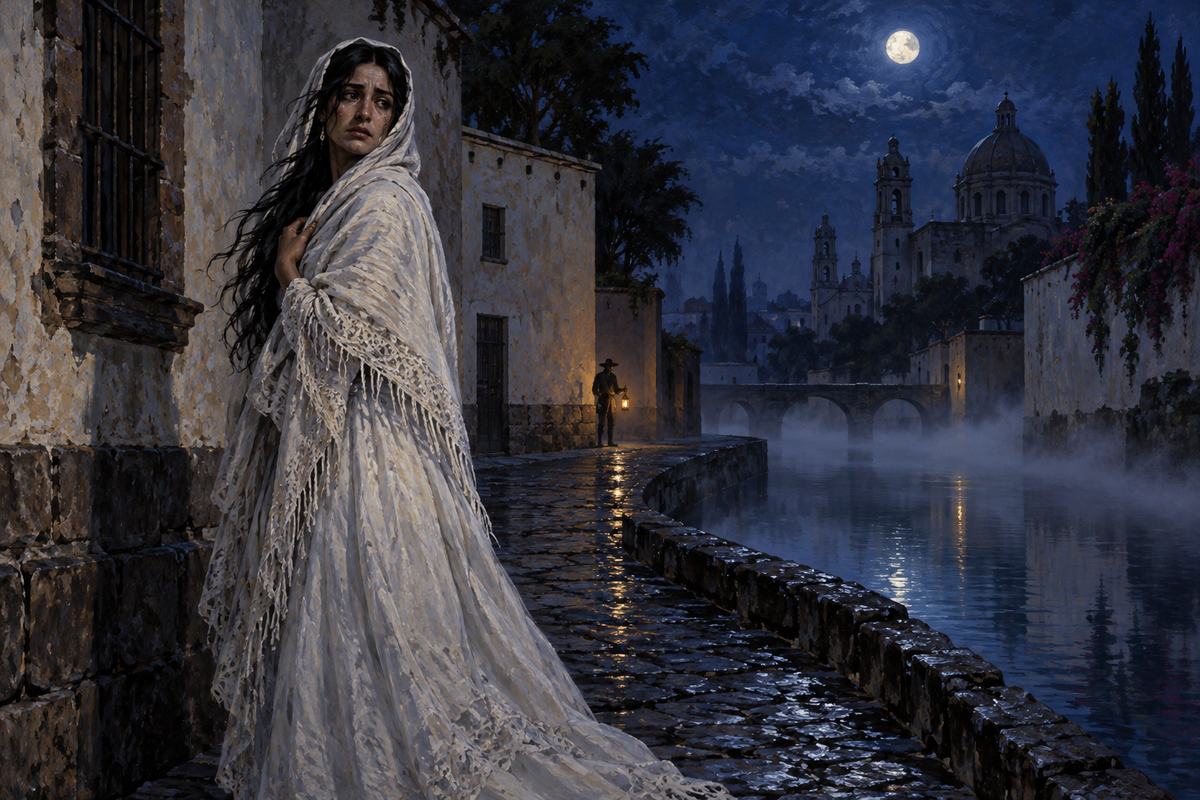
In Thomas Allibone Janvier’s collected version, La Llorona is not confined to a riverbank. She moves through Mexico City at night in white clothing, her head covered by a rebozo. Sometimes she wakes a watchman and asks the time. Then she announces that she must reach a distant city, cries out for her missing children and vanishes. Other tellings in the same account put her in several far-separated places during one night. The question sounds ordinary enough to answer. That is its trap: a moment of conversation opens onto a journey no living pedestrian could make.
Following the trail
Janvier’s Legends of the City of Mexico preserves this version and describes collecting oral traditions with his wife from Mexican informants. The book is evidence of a long-lived story in circulation, not a death register for one identified woman. Its older claims about a single ancient origin should not erase the tradition’s many regional forms.
Why it stays with us
This version’s unsettling feature is distance. The grieving voice belongs everywhere and nowhere, crossing the map faster than a listener can work out what has just been asked.