Maryland Goatman
Maryland’s Goatman changes from bridge guardian to failed experiment as different tellers take hold of him. A university folklore archive preserves those differences instead of forcing them into one origin.
The account
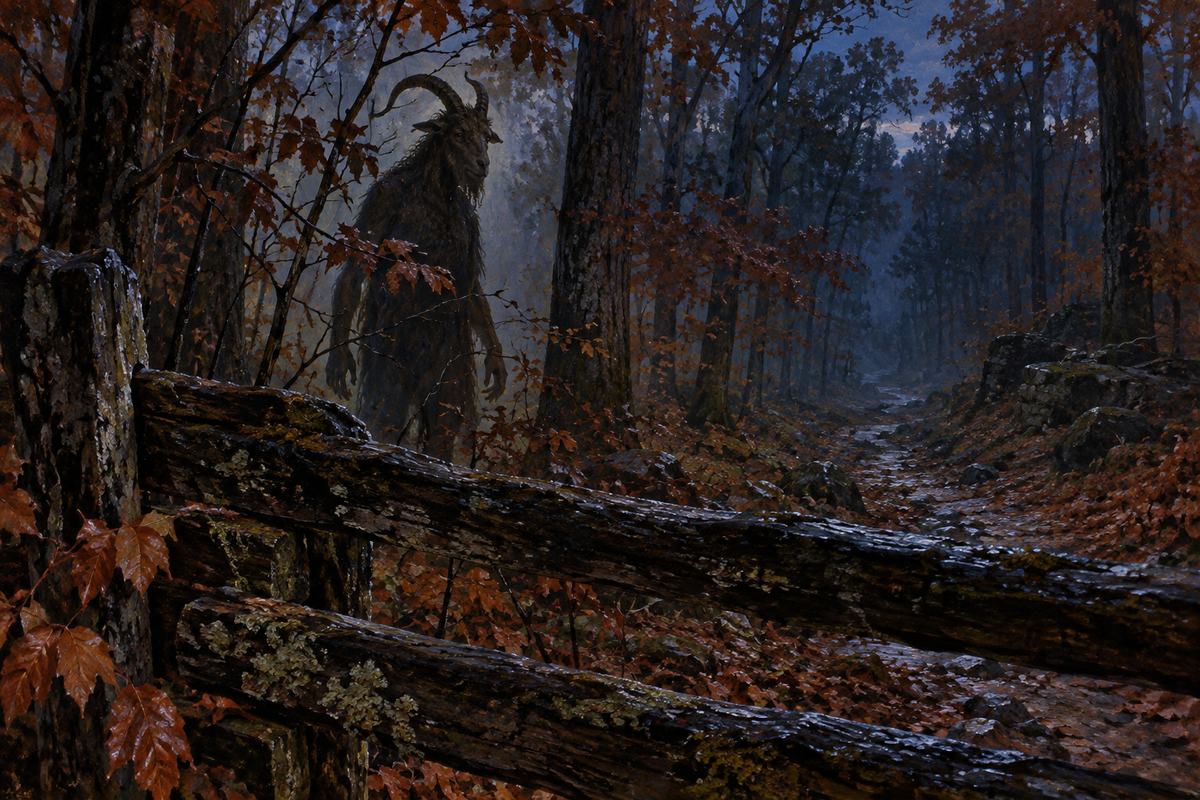
On Tucker Road, one version of Maryland’s Goatman waits near a narrow bridge, angry because children tried to burn his small shack. That telling was recorded in 1971 and survives in the University of Maryland’s folklore collection. Other versions place a horned, threatening figure on different roads or explain him through an accident. The later laboratory story supplies another origin altogether. What remains consistent is a place just beyond ordinary supervision, where a young visitor is warned that somebody is already waiting.
Following the trail
The university collection preserves what named people told student collectors, rather than certifying the events inside each tale. A scholarly study traces how collection, news coverage and legend-tripping helped spread Goatman stories. These records support a twentieth-century regional tradition; they do not document a transformed scientist or an actual half-goat person. Different origins are evidence of the legend’s movement, not missing pieces of a single police case.
Why it stays with us
The bridge version is especially intimate. It gives the feared figure a home, a grievance and a boundary. Crossing into his space becomes the story’s dangerous act, making an ordinary road feel as though it belongs to someone the map has left out.