Two French-style sandwich loaves
Adapted presentation of the existing canonical FOOD-001 and complete DAT-0012 downloadable batch sheet; quantities and bake targets are preserved.
- YIELD
- 2 loaves in 9 × 5-inch pans
- PREP / WAIT
- 25 minutes active; 75–105 minutes rising; 90 minutes cooling
- COOK
- 28–34 minutes
Ingredients
- 473 g warm water at 105–110°F (2 cups)
- 7 g active dry yeast (2 1/4 tsp)
- 42 g honey (2 tbsp)
- 720–780 g all-purpose flour; begin with 720 g
- 57 g salted butter, very soft (4 tbsp)
- 12 g fine salt (2 tsp)
- 2 tsp neutral oil or softened butter for bowl and pans
- 1 tbsp melted butter for brushing (optional)
Method
- Stir water, honey and yeast together and let stand 5–10 minutes.
- Add 720 g flour and the salt. Mix on low with a flat beater until no dry flour remains, then add butter in pieces.
- Switch to a dough hook and knead 7–9 minutes. Add reserved flour a little at a time only if the dough stays wet and puddled; the finished dough should be soft and slightly tacky.
- Transfer to a lightly greased bowl, cover and rise 45–60 minutes, until approximately doubled.
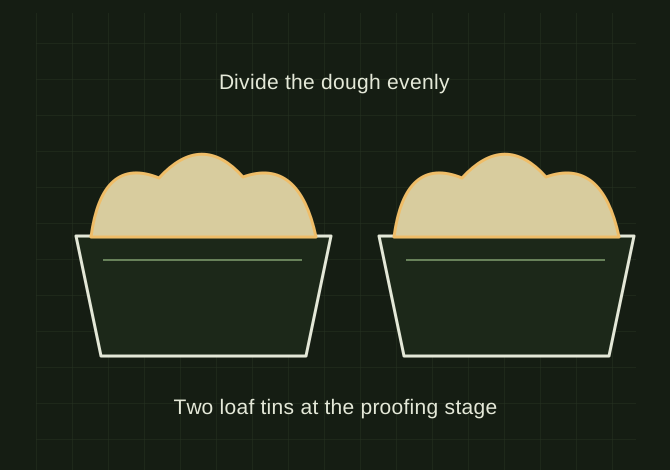
- Grease two 9 × 5-inch pans. Divide dough evenly, flatten each portion into a rectangle, roll snugly into a log, pinch the seam and place seam-side down.
- Cover and proof 30–45 minutes, until the dough crowns about 1 inch above the rims. Preheat oven to 375°F while the loaves proof.
- Bake 28–34 minutes, rotating near 20 minutes if needed and tenting if tops brown early. Check for a 190–195°F center. Brush with optional melted butter.
- Cool in pans 5–10 minutes, then rack-cool at least 90 minutes before slicing or bagging.
Notes & storage
- This is the existing canonical FOOD-001/DAT-0012 formula; the old DAT page's statement that quantities are missing is stale.
- Once completely cool, keep airtight at room temperature about 2–3 days for best quality, or slice and freeze up to 3 months.
- No new kitchen test is claimed; proofing depends on dough and room temperature.