Koozie jig warping and production fixture
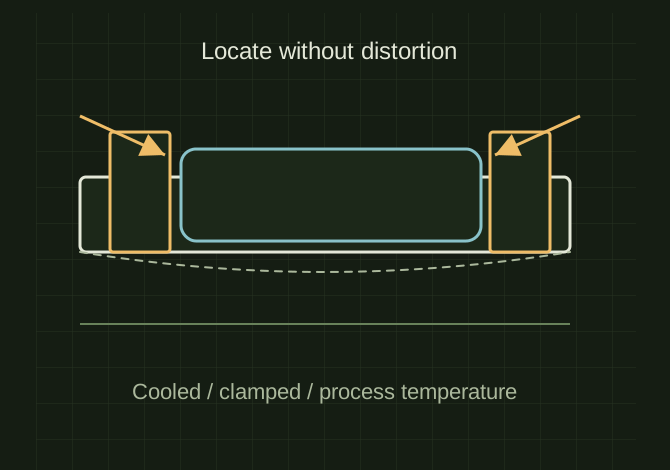
A koozie fixture needs to hold the work repeatably without distorting it. First determine whether warping happens during printing, under clamping, or during a heat process.
When does the fixture move?
 OPEN FULL SIZE ↗
- Separate
- Print warp / clamp deflection / heat movement
- Measure
- Locating faces and actual temperature
- Warning
- Unverified plastic is not a heat-press fixture
TECHNICAL NOTES///
A koozie fixture needs to hold the work repeatably without distorting it. First determine whether warping happens during printing, under clamping, or during a heat process.
GOALRun the first test described in this guide and record the result for koozie jig warping and production fixture.
EQUIPMENT
- FDM printer / slicer
- Slicer project
- Calipers or inspection method
MATERIALS
- Material requires confirmation
STEPS
- Measure the workpiece and define the locating faces, clearance, clamp force and actual process temperature.
- For a fit-only prototype, try 0.20 mm layers, 4 walls and 25–35% infill. Add broad support and ribs where they resist the actual load rather than filling every cavity solid.
- Measure the cooled fixture on a flat surface. If it warps during printing, address bed adhesion, material shrinkage and drafts before changing the fixture offsets.
- If it moves during production, measure its temperature and loaded deflection. Select material using continuous-service data for that condition or use a metal fixture for heat exposure beyond the plastic’s capability.
TROUBLESHOOTING
- A higher nozzle temperature does not make the finished part heat resistant. Do not put an unverified plastic jig into a heat press. Over-tight clamping can create the very ovality the jig was supposed to prevent.
THINGS TO WATCH FOR
A higher nozzle temperature does not make the finished part heat resistant. Do not put an unverified plastic jig into a heat press. Over-tight clamping can create the very ovality the jig was supposed to prevent.
RESULTRun repeated unloaded and process-temperature fit checks and log drift from the original locating surfaces.
DEVELOPMENT HISTORY///
Imported as an independent manifest record; public copy keeps uncertainty visible.
SPECIFICATION///
RELEASED MATERIAL///
Run repeated unloaded and process-temperature fit checks and log drift from the original locating surfaces.
The record keeps what is known at this revision. Unfinished tests stay unfinished here.