Phone-case support strategy
The recovered material identifies phone-case support strategy as its own topic. This page preserves the useful direction, the next practical checks, and the limits of the surviving notes without inventing measurements or presenting an unverified idea as a finished standard.
Where a case needs support
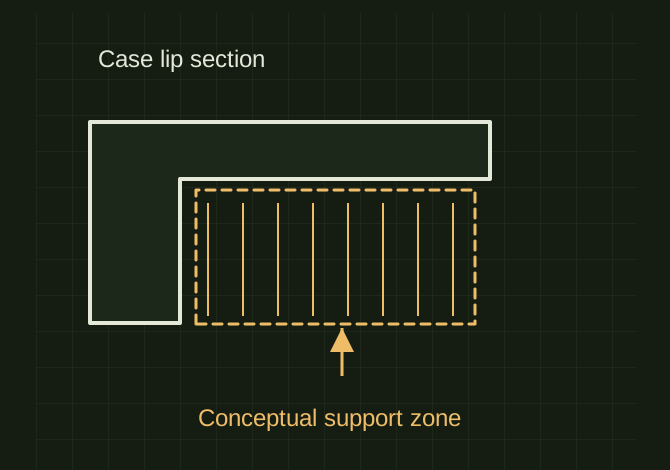 OPEN FULL SIZE ↗
- Listed material
- PP
- Focus
- Fit, flex and openings
- Status
- Abandoned
TECHNICAL NOTES///
A public-safe 3d printing record for phone-case support strategy, separated from the other experiments in the collection.
GOALTurn phone-case support strategy into a repeatable public note with a clear next test.
EQUIPMENT
- FDM printer / slicer
- Slicer project
- Calipers or inspection method
MATERIALS
- PP
STEPS
- Confirm what the part must do and which printed feature matters most.
- Check geometry, clearances, orientation, and material before slicing.
- Print a small test or the least expensive revision first.
- Inspect the finished part after it has cooled completely.
- Record the next change with a photo or measurement.
TROUBLESHOOTING
- A slicer preview is not proof that a finished part will fit or move.
- Change one process variable at a time so the next result is attributable.
- Keep material identity and nozzle size with every saved revision.
RESULTPublic-safe starting record; validate against the next real test.
DEVELOPMENT HISTORY///
Imported as an independent manifest record; public copy keeps uncertainty visible.
Moved to the Graveyard by reviewed content-recovery decision.
SPECIFICATION///
RELEASED MATERIAL///
Public-safe starting record; validate against the next real test.
The record keeps what is known at this revision. Unfinished tests stay unfinished here.