Antarctic Bunkers: The Base Beneath the Story
A German expedition, submarines arriving after surrender, and a vast American polar operation became ingredients in stories of a hidden Antarctic refuge. The connections deserve a closer look beneath the ice.
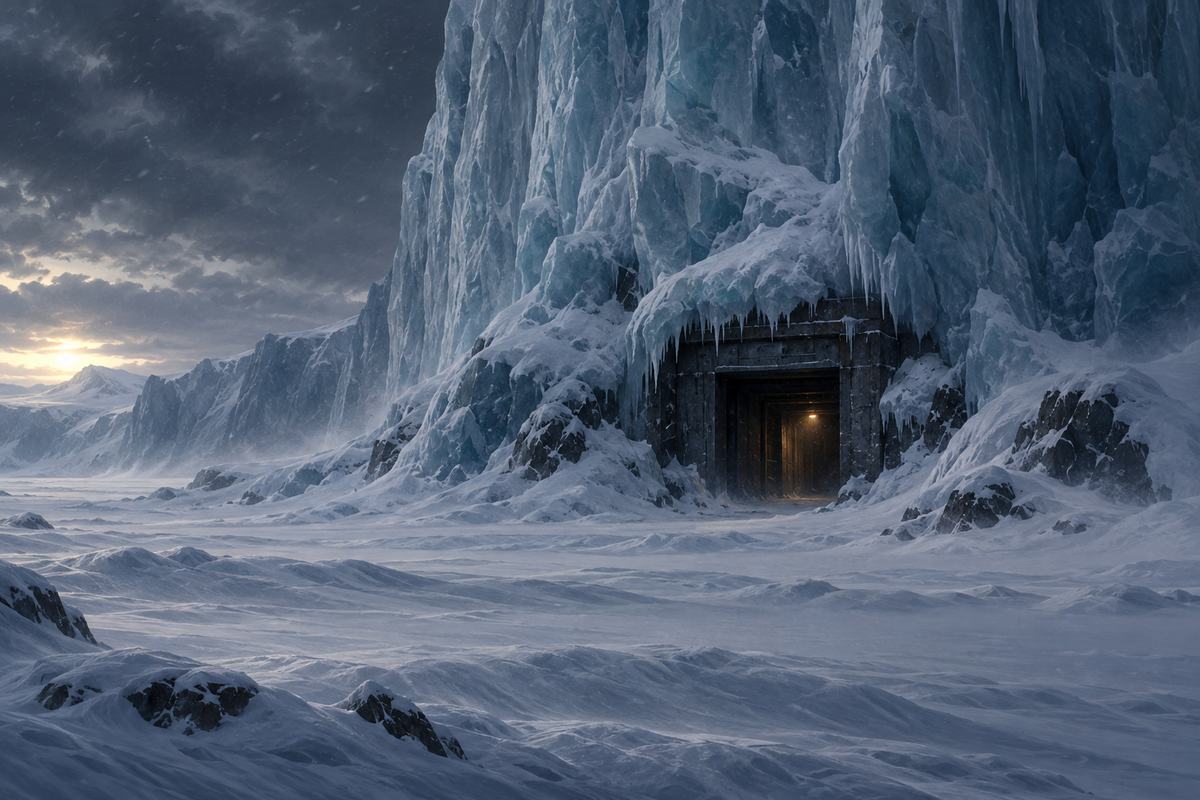
The account
The hidden-base story imagines the ice as a lid. Somewhere beneath Antarctica, the tale proposes, a German wartime refuge survived beyond the surrender. Some versions claim that Nazi officials escaped to the supposed refuge, although the historical review cited here finds no evidence for that Antarctic connection. Real events are drawn toward that imagined entrance: the Schwabenland expedition, two U-boats reaching Argentina in 1945, and the American fleet sent south during Operation Highjump. Later versions add attacks on the base and even nuclear destruction. These are claims assembled around separate historical episodes, rather than a single surviving expedition account.
Following the trail
Polar historians Colin Summerhayes and Peter Beeching examined the alleged connections in 2007. The German expedition visited Dronning Maud Land in early 1939, but planned follow-up expeditions did not occur after war began. Their review found no evidence of the alleged wartime base. It also distinguished Highjump's polar training from a supposed assault, and located the later Argus nuclear tests far to the north, over the ocean. The events were real; the hidden installation linking them was not demonstrated.
Why it stays with us
What makes the story persist is its geography. A distant white continent offers almost unlimited room for whatever a teller wants to conceal. Following the dates and distances turns that blank space into a map—and makes it possible to see where the later story crosses gaps in the record.