The Face on Mars: A Monument Made of Shadow
A Viking photograph showed a landform uncannily like a face. Higher-resolution visits transformed the apparent monument into rough terrain, preserving a striking case of expectation finding architecture in an unfamiliar landscape.
The account
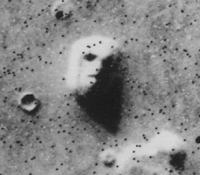
In 1976, a Viking orbiter image returned a face from Mars. On a worn landform in Cydonia, shadow seemed to build eyes, a nose and a mouth. The distant feature acquired an enormous human question: had somebody carved it? Books and broadcasts gave the formation a second identity as a possible artifact, and each return to the site carried the promise that the mask might finally explain itself.
Following the trail
NASA's original account described a natural rock formation shaped by erosion and shadow; transmission errors also contributed details in the early image. Mars Global Surveyor photographed the site at much higher resolution. Its April 2001 image resolved features at roughly two meters per pixel and showed a complex, eroded landform. The photographs provide no evidence of a deliberately carved face.
Why it stays with us
There is something unsettling about a face appearing where no person should be. This one also demonstrates why better evidence matters: a more detailed view can dissolve the feature that seemed most obvious at a distance. The wonder survives, redirected toward a landscape immense enough to make a momentary portrait out of its geology.