Oiwa’s Face in the Lantern
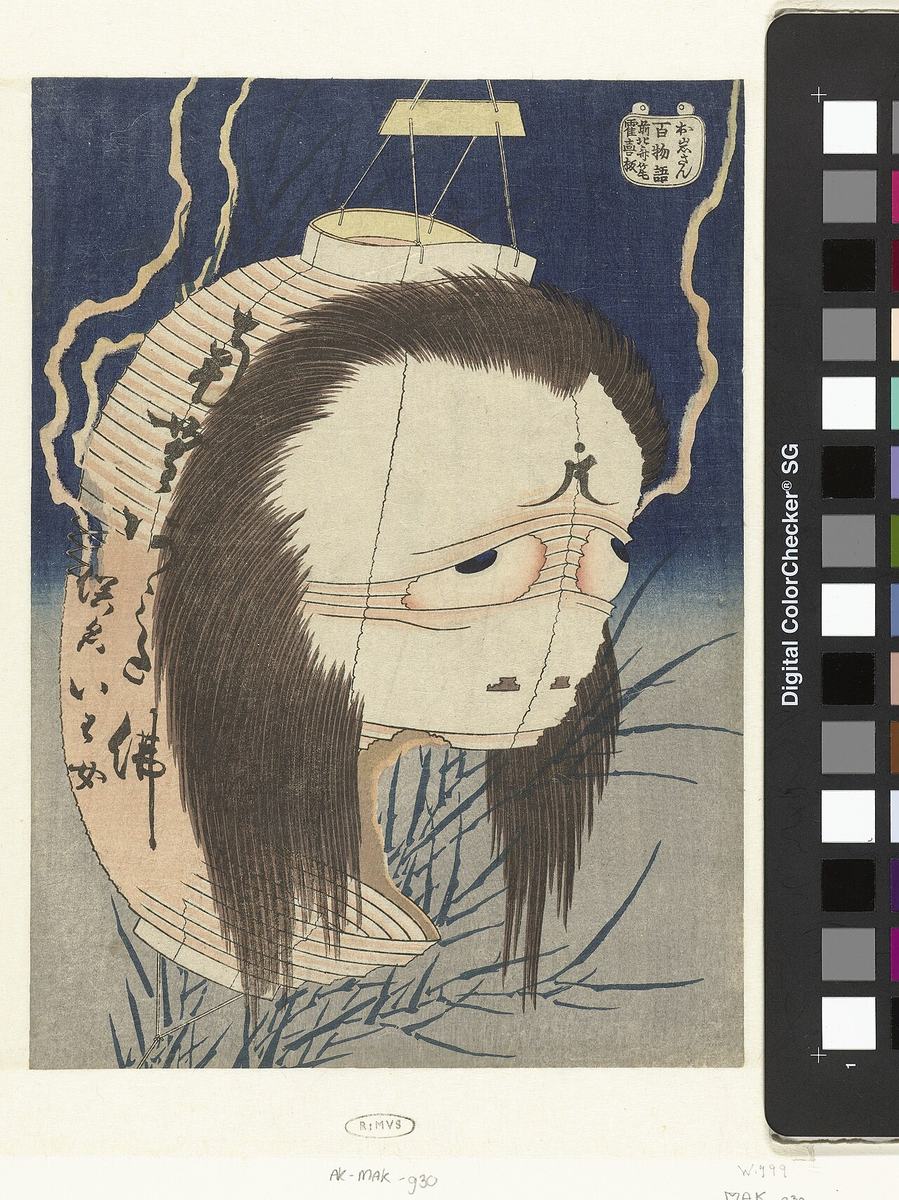
Oiwa’s betrayed spirit returns through a paper lantern in one of Japan’s enduring ghost plays. The story’s theatrical machinery helped give a centuries-old haunting an unforgettable visible form.
The account
A lantern should make the room easier to understand. Oiwa’s story makes it the thing that cannot be trusted. In the familiar theatrical tradition, a betrayed and poisoned wife returns to torment her husband, her face appearing wherever he tries to escape it. On the kabuki stage, the ghost can emerge from a paper lantern. The everyday light becomes a body for the accusation he cannot avoid. The effect is frightening because concealment no longer works: even an object meant to illuminate his surroundings brings the wrong face into view.
Following the trail
Japan Arts Council’s Digital Library dates Tsuruya Nanboku IV’s Yotsuya Kaidan to its 1825 premiere and describes its stage effects. The Spencer Museum of Art explains Oiwa’s story through a surviving lantern-ghost painting. These are records of a long-established theatrical and artistic tradition, not proof that its dramatic murder narrative happened to a historical woman exactly as performed.
Why it stays with us
The ghost’s durability owes something to stagecraft. An audience could watch an ordinary prop transform in front of them, then carry the image home. Afterward, the lantern needed no actor inside it to feel less ordinary.