The Ghost Whose Feet Disappear
A white-clad figure fades before reaching the floor. The footless ghost associated with Maruyama Ōkyo became an enduring way to picture someone who no longer fully belongs here.
The account
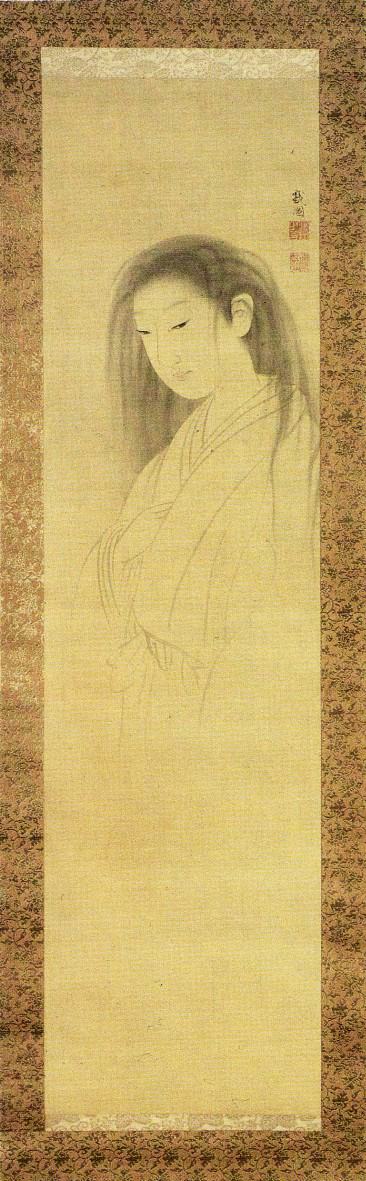
The figure is recognisably human until the eye reaches the floor. White clothing continues downward, then the body fails to arrive. No feet explain how the person is standing there. This is the visual ghost tradition associated with the eighteenth-century painter Maruyama Ōkyo: an apparition made unnerving through an absence rather than an added monstrous feature. The Edo-Tokyo Museum identifies his white-clad, footless figures as a style that became standard in later ghost painting. A viewer can understand the disturbance without knowing the woman’s name or hearing the beginning of her story.
Following the trail
The museum’s exhibition account includes the work known as The Ghost of Oyuki and a performance of the traditional rakugo story Ōkyo’s Ghost. Those records establish an enduring connection between painting and storytelling. They do not demonstrate that a painter saw a spirit, or that all Japanese ghost traditions share one origin or appearance.
Why it stays with us
What makes this worth keeping is its economy. Removing the feet is enough to separate a person from the ground beneath them. The image lets the eye discover the haunting gradually, from an ordinary face to an impossible ending.