Berry Pomeroy’s Gothic Afterlife
Berry Pomeroy’s ruined walls became a stage for jealous lovers and returning spirits. Its haunting has a traceable literary life, tangled with the history visitors imagined for it.
The account
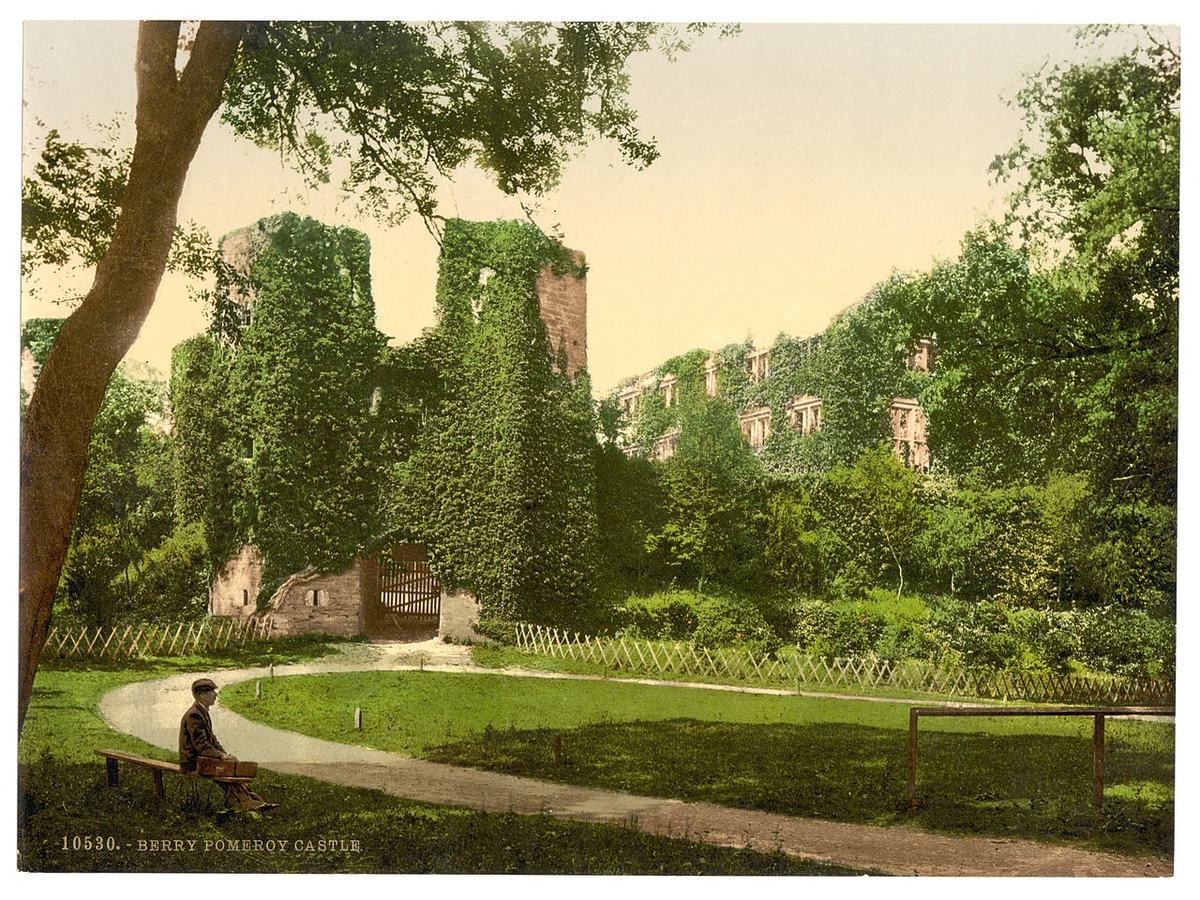
A roofless castle leaves plenty of room for another story. At Berry Pomeroy, the ruins became associated with jealousy, murder and ghosts returning for revenge. The dark family drama looks as though it ought to have been waiting inside the stone all along. Yet the haunting also has a recognisable publishing history: an 1806 Gothic novel, The Castle of Berry Pomeroy, helped carry that reputation beyond Devon. Its imagined horrors fitted the secluded ruin so well that the building and the book began to reinforce one another.
Following the trail
English Heritage identifies the novel and its Victorian reprints as important to the castle’s ghostly reputation. It also corrects an older misconception: this was not an ancient Norman fortress. The first castle belongs to the late fifteenth century, followed by ambitious Seymour building work. A picturesque ruin is not automatically evidence for the family crimes attached to it.
Why it stays with us
Here the unsettling object is the ruin itself: a real structure made stranger by generations of readers. The useful question is how fiction becomes something visitors half remember as local history.