Hinton Ampner’s Unseen Household
Mary Ricketts described violent nighttime noises in a house that should have been asleep. Her written account survived long after the original Hinton Ampner was demolished.
The account
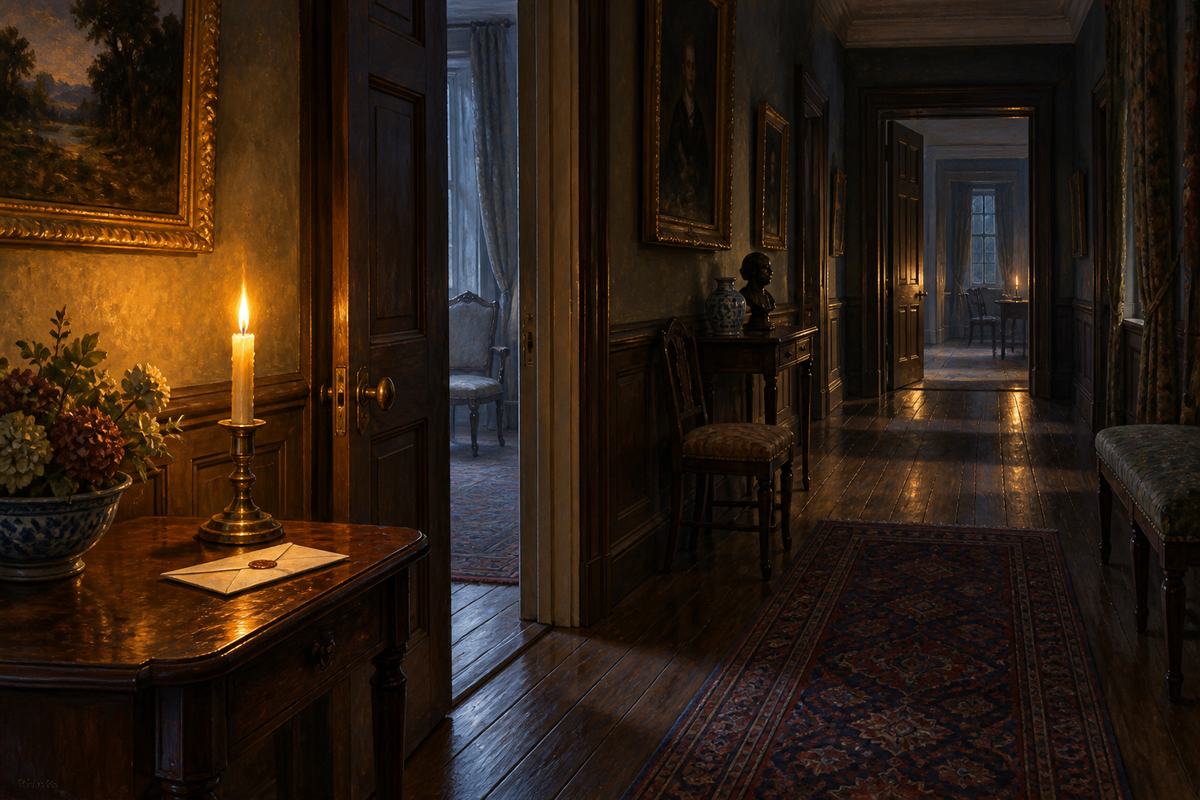
Mary Ricketts had settled at Hinton Ampner when the house seemed to acquire a second, invisible household. In her account, doors were shut with extraordinary force during the night. Her husband was away in Jamaica for years, and she wrote to him about what she was experiencing. Nothing elaborate is needed to make that situation uncomfortable: familiar rooms, sounds suggesting other people, and no satisfactory person to place behind them. The story’s centre is a woman trying to describe disturbances in the place where she had to continue living.
Following the trail
The National Trust dates the Ricketts tenancy to 1765–1772 and traces the haunting to Mary’s letters and written accounts. A version appeared in The Gentleman’s Magazine in 1872. The original house was demolished in 1793, so the surviving mansion should not be presented as the unchanged scene of her experiences.
Why it stays with us
That missing building gives the account a second kind of absence. We can follow the words, but cannot simply walk into the original room and listen. The surviving story has outlived the architecture that supposedly made it audible.