Mokele-mbembe
Mokele-mbembe is often pictured as a dinosaur hidden in the Congo Basin. The surviving accounts are less settled: translated descriptions, disputed recordings and an expectation that may have arrived first.
The account
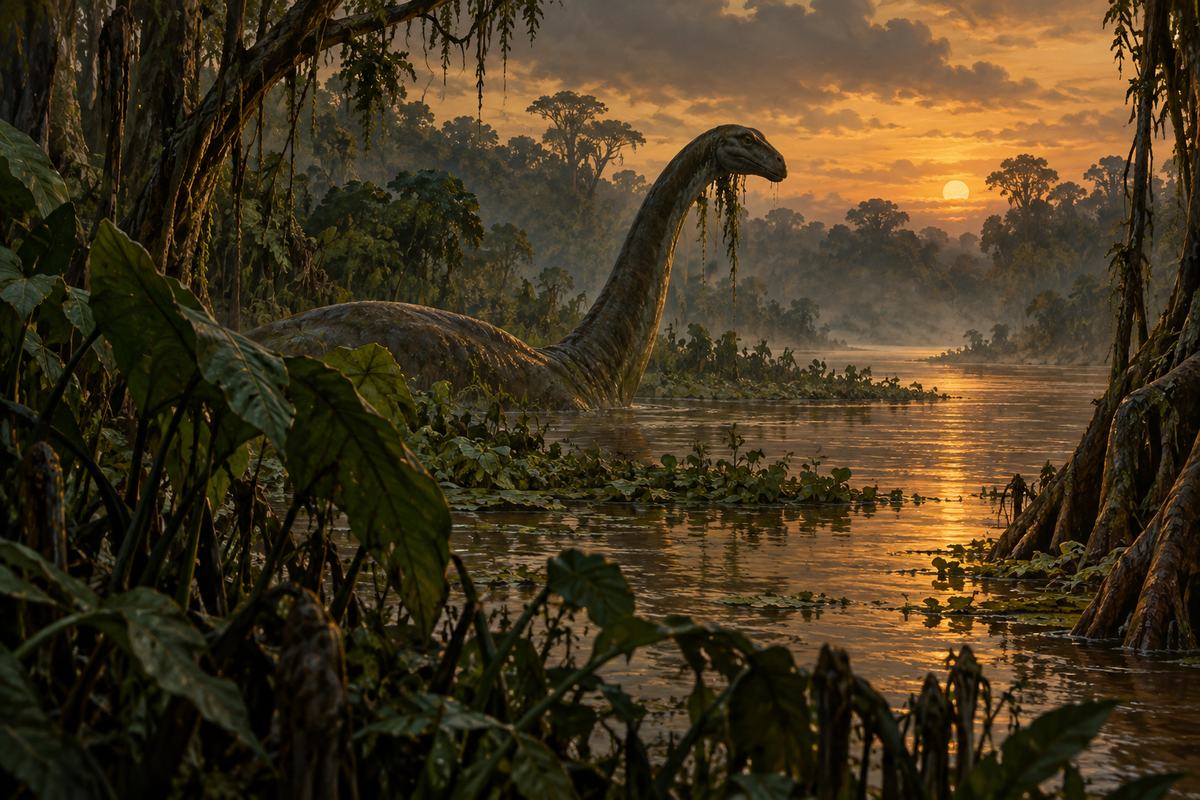
In modern expedition literature, Mokele-mbembe waits in the Congo Basin’s waterways as a long-necked animal with a heavy body and tail. A 1981 expedition led by Herman Regusters returned from the Lake Tele area with claimed sounds and an indistinct photograph, rather than a captured animal. Retellings commonly give the unseen creature the outline of a sauropod dinosaur. That image makes a forested channel seem like a place where prehistory could still be moving just beyond sight.
Following the trail
Smithsonian’s review finds no convincing physical evidence for a living sauropod in these reports. It also points to inconsistencies between popular descriptions and modern understanding of dinosaur anatomy. Translation, leading expectations and the movement of stories between communities and visiting searchers complicate the record. Regional accounts deserve their own context; they are not automatically eyewitness descriptions of the dinosaur outsiders came hoping to find.
Why it stays with us
The compelling part is the distance between a name, a description and a reconstruction. Once an expedition carries a picture into the forest, a resemblance can feel like recognition. This story remains worth reading with that picture visible beside the testimony, rather than concealed inside it.