Mongolian Death Worm
The Mongolian death worm entered expedition literature as a creature nobody in the room had seen. Its reported danger was immediate; its physical evidence has remained much harder to find.
The account
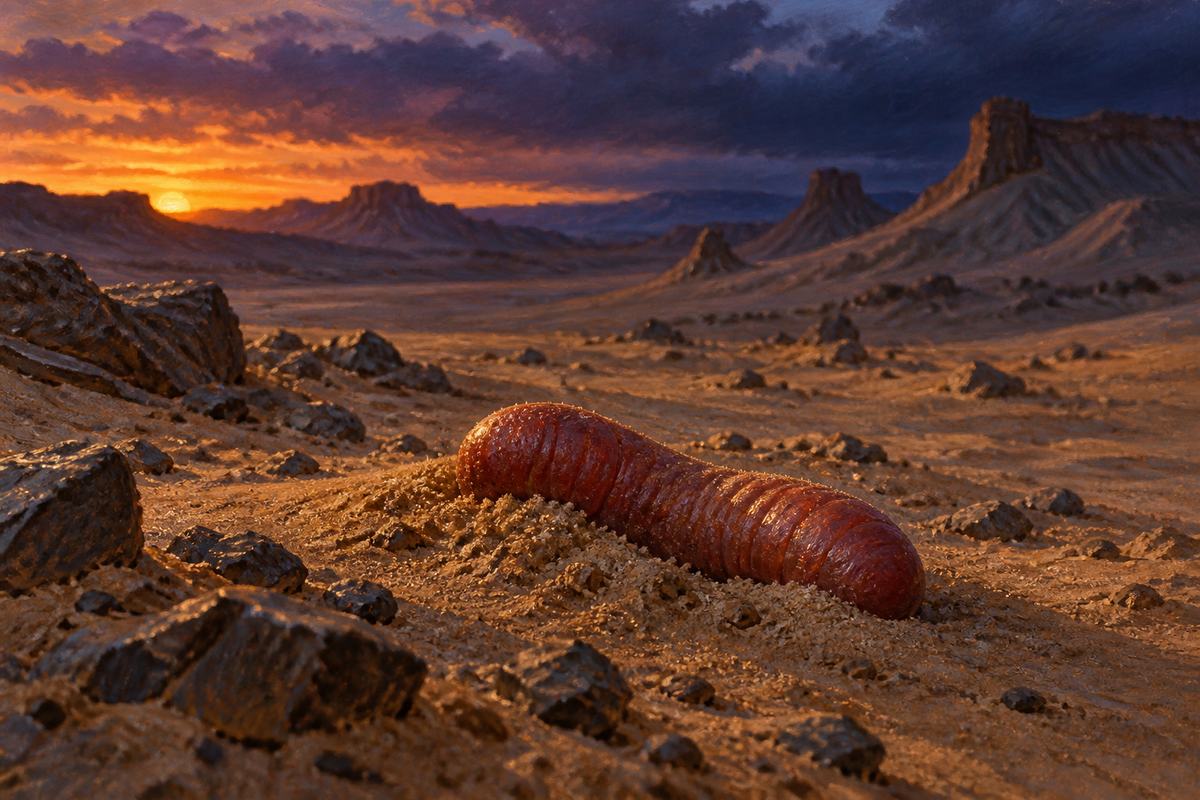
Roy Chapman Andrews recorded the death worm in his 1926 account of expeditions to Mongolia. Officials asked him to obtain a specimen of a creature described as thick, short and sausage-like, without an obvious head, tail or legs. It was said to be lethally poisonous. The request brought a desert legend into the paperwork of an actual scientific journey. Andrews later wrote that he considered the animal probably mythical, but the name continued traveling long after his expedition returned.
Following the trail
PBS’s Monstrum traces this published encounter with the story and distinguishes it from later embellishments. Familiar claims about acid or electrical attacks should not all be projected backward onto one unchanged ancient account. Andrews documented what he was told, not a worm he captured or observed. The sources reviewed here provide no authenticated specimen establishing the creature described in these retellings.
Why it stays with us
There is a particular unease in an animal imagined without a readable front or back. Nothing in its outline tells you where to look for intention. The expedition setting sharpens that feeling: an official request sounds practical, even when the requested object may belong entirely to inherited fear.