The Babylonian Ghost Tablet: A Companion for the Restless
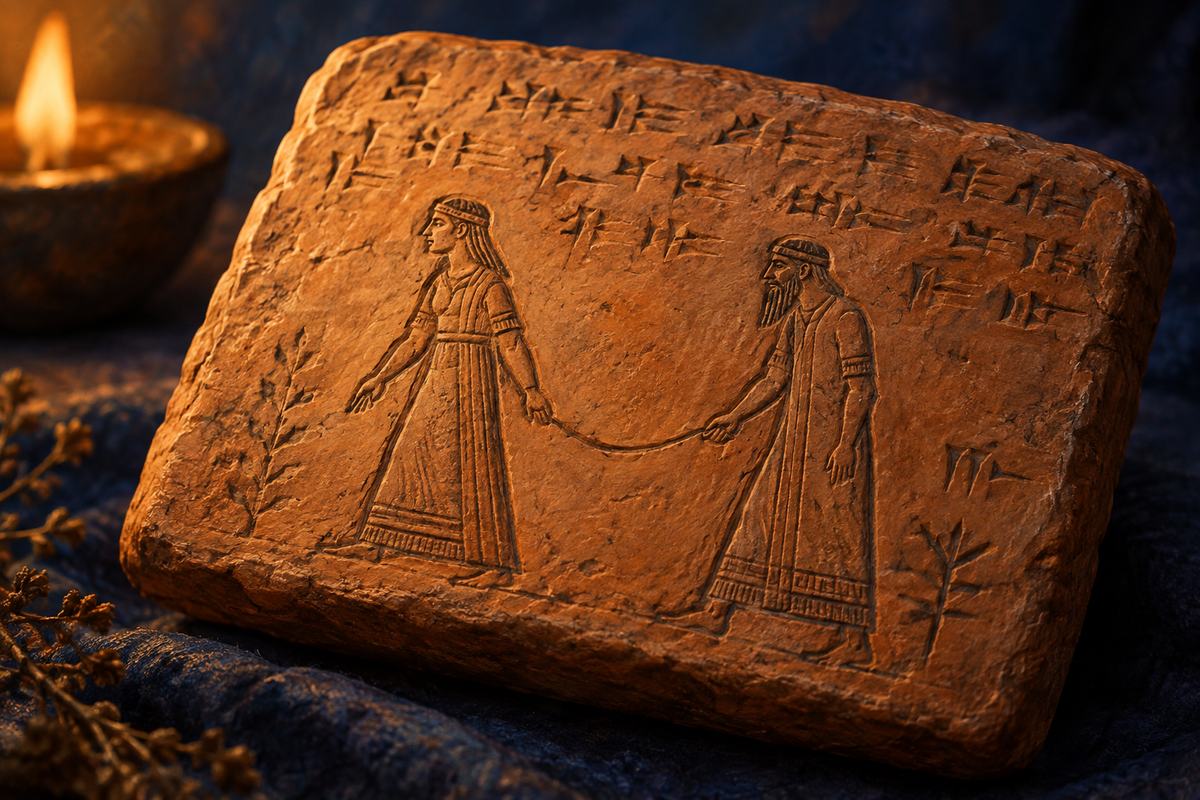
A Babylonian ritual tablet pairs written instructions with an image of a spirit being led away. Its practical response to haunting imagines that an unwanted visitor might be persuaded to leave.
The account
The faint drawing shows a bearded male figure held by a rope and led by a woman. Read beside the cuneiform text, it becomes something more particular than a sketch of two travelers. Curator Irving Finkel interprets the man as a restless ghost and the woman as the companion intended to guide him below. The ritual treats the presence in a household as a problem with motives, preferences and a possible solution.
Following the trail
In a 2023 interview, Finkel discussed this British Museum tablet as a guide to dealing with ghosts; the article dates it to the fourth century BCE and names its scribe, Marduk-apla-iddin. Damage leaves only the opening words of the invocation, addressed to the sun god Shamash. Assyriologist Moudhy Al-Rashid independently discusses the same tablet and dating. The artifact is evidence for Babylonian ritual practice and interpretation, not proof that the prescribed action removed an actual spirit.
Why it stays with us
The small image suggests an oddly domestic approach to an extraordinary visitor. Instead of imagining only a battle, the proposed response addresses what might make the ghost willing to go. That idea gives the object both tenderness and unease. A family could recognize the personality of someone dead while still needing the separation that death was supposed to provide.