Pazuzu: The Frightening Face Worn for Protection
The snarling face of Pazuzu could be worn to turn danger outward. Assyrian amulets reveal a protective role for a feared wind demon very different from his later horror-film reputation.
The account
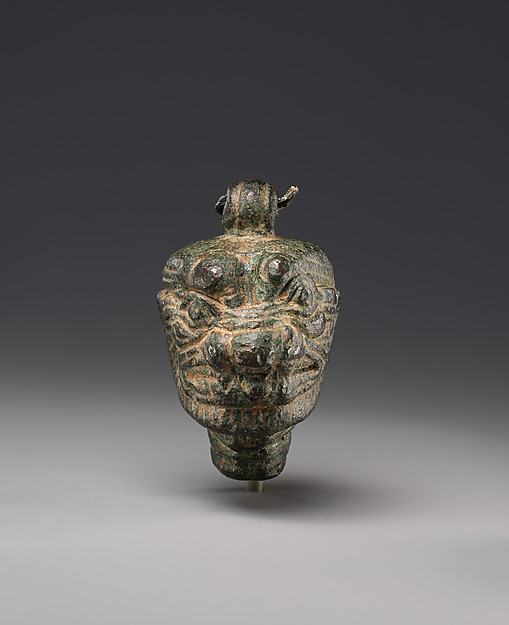
The face is small enough to wear but designed to confront whatever approaches: bulging eyes, a snarling mouth and a thin neck beneath the head. A bronze Pazuzu pendant in the Met's collection hangs so that its gaze points away from the wearer. The creature associated with dangerous winds could also repel a different threat, Lamashtu. Protection came through directing one frightening power against another, with the demon's features carried into daily life.
Following the trail
The Metropolitan Museum dates this pendant to approximately the eighth or seventh century BCE and places the earliest known Pazuzu imagery in the late eighth century. Its catalogue explains the outward-facing suspension and protective association. These objects belong to first-millennium Assyrian and Mesopotamian traditions; calling every example 'Sumerian' would blur important differences in time and culture. The surviving amulets show what people made and used, without verifying the supernatural powers they sought.
Why it stays with us
Appearance alone can mislead a modern viewer. A face that seems to announce danger may have been intended to stand between danger and a vulnerable person. Holding that double role in mind changes the object from a simple monster image into something more human: a portable answer to fear, worn close to the body.