Peppery beef jerky with an optional hot-smoke finish — uncured
New uncured adaptation of the recovered Worcestershire, soy and pepper flavor profile. The original Tender Quick recipe remains a separate historical record. Moist preheating and conservative cold storage are added; this is not presented as Robert-tested or as a validated shelf-stable cured product.
- YIELD
- About 8–12 oz finished jerky from 2 lb beef; actual yield varies
- PREP / WAIT
- 20 minutes plus 8–12 hours refrigerated marinating
- COOK
- About 20–35 minutes heating/smoking, then 3–8 hours or longer drying
Ingredients
- 2 lb very lean beef, such as eye of round, with visible fat removed
- 3 tablespoons Worcestershire sauce
- 2 tablespoons soy sauce
- 2 teaspoons coarse black pepper
- 2 teaspoons crushed red pepper flakes
- 1 teaspoon garlic powder
- 1 teaspoon onion powder
- 1/2 teaspoon smoked paprika
- 1/4 teaspoon cayenne pepper; use 1/2 teaspoon for a hotter batch
- 2 cups water for the boiling step, plus more only as needed to cover the strips
Method
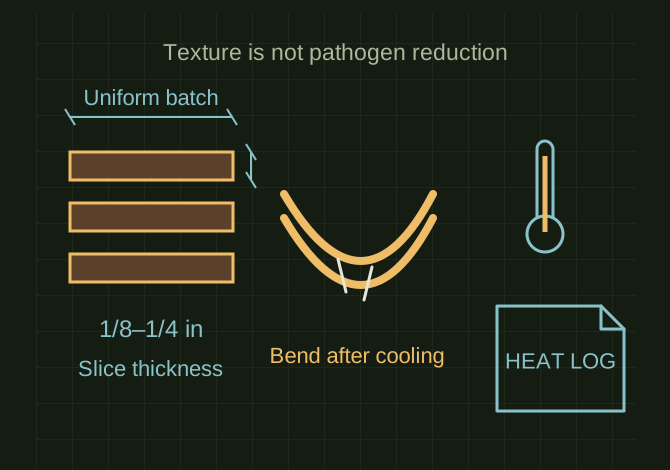
- Trim off visible fat. Slice chilled beef across the grain into even 1/8–3/16-inch strips, never thicker than 1/4 inch. Wash hands and clean utensils after handling raw meat.
- Mix the Worcestershire, soy sauce and all marinade seasonings. Add the beef, turn to coat, cover and refrigerate at 40°F or below for 8–12 hours. This is an uncured recipe: add no Tender Quick, Cure #1, Cure #2 or unidentified pink salt.
- Before drying, put the meat and its marinade in a saucepan. Add the measured water and, if needed, more water just to cover the strips; work in batches rather than crowding the pan. Bring to a full boil, then boil 5 minutes, stirring to separate the strips. Check several of the thickest strips with a thin-tip thermometer: they must reach 160°F. Continue heating if needed. Discard the cooking liquid after use.
- For real smoke flavor, immediately transfer the hot cooked strips to clean racks in a smoker already holding 225°F. Leave gaps between strips and smoke with mild cooking wood for 15–30 minutes, watching thin pieces closely. This short hot-smoking stage is optional; the smoked paprika supplies flavor when it is skipped.
- Move the strips directly to a preheated dehydrator at 140°F in a single layer. Use a separate thermometer to check drying temperature. Begin checking cooled samples after about 3 hours, then every 30–60 minutes; drying can take 3–8 hours or longer with thicker pieces or a full machine. Do not use the clock as the endpoint.
- A cooled strip should be leathery, with fibers separating when bent and no soft wet center. Remove finished pieces individually. Let the finished batch cool briefly on clean racks, then package in small portions and refrigerate at 40°F or below within 2 hours of leaving the heat.
- For this new recipe, use refrigerated jerky within 3–4 days or freeze portions promptly for longer keeping. This deliberately conservative plan makes no room-temperature storage or vacuum-sealed shelf-life claim.
Notes & storage
- A 160°F dehydrator setting, cured color, smoke exposure or a bend test does not establish that the meat reached its required internal heating temperature. Complete the moist heating step before drying.
- This recipe is for a new batch of lean beef. It does not provide a way to rescue meat that was previously held at unsafe temperatures, and it is not a process for poultry, ground meat or wild game.
- Optional dry finish for this 2-lb raw-meat batch: toss the still-warm finished jerky with 1/4 teaspoon coarse black pepper and 1/8 teaspoon garlic powder from clean containers. Add no cure and no raw-meat marinade. Storage stays the same.