Tunguska: The Explosion Without a Crater
A vast blast flattened Siberian forest without leaving the expected impact crater. The evidence fits an object exploding in the atmosphere, although the missing crater helped create a lasting invitation to speculation.
The account
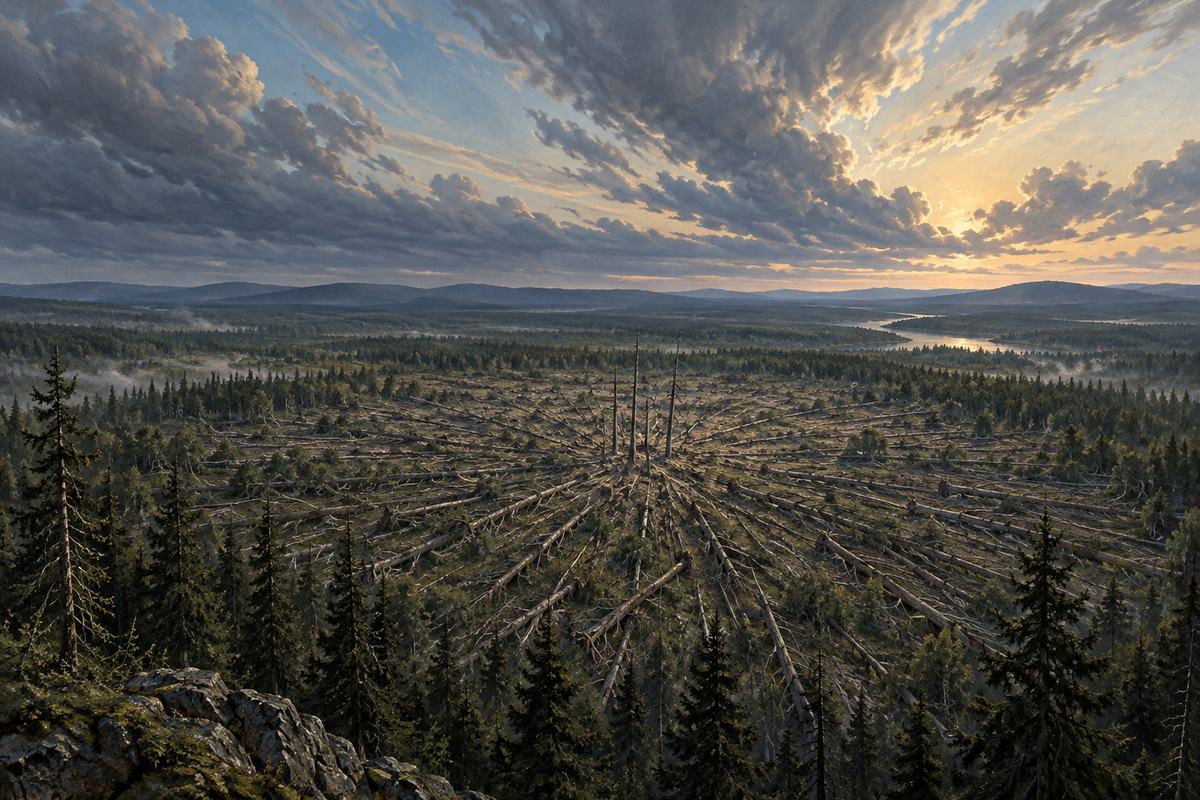
On June 30, 1908, something exploded over Siberia with enough force to flatten an immense area of forest. The trees became the event's enduring witnesses, laid outward across the landscape. Yet the expected crater was missing. That absence made Tunguska feel like a catastrophe with its cause removed. The delay before detailed investigation left another opening, and later extraordinary explanations crowded into a real event whose original object had not survived intact.
Following the trail
NASA describes Tunguska as an atmospheric explosion of an incoming space object, with most researchers favoring an asteroid. Modern modeling explores how a body can deposit enormous energy above the ground and leave no conventional impact crater. Details of its size and composition are estimated from indirect evidence. Claims of a secret weapon or exotic intervention are not supported by the evidence summarized in these studies.
Why it stays with us
The forest makes the violence visible while the sky hides the object responsible. That combination feels conspiratorial even when the mechanism is natural: a devastating arrival and no machine to recover. Tunguska remains worth investigating because uncertainty over an airburst's exact parameters is a scientific problem, distinct from evidence that someone deliberately caused it.