U225X / STRANGE FILES
Dyatlov Pass: The Tent Beneath the Snow
Northern Ural Mountains, Russia / February 1959; later scientific studies
Nine hikers died after a mountain camp was abandoned in winter. Modern avalanche modeling offers a plausible physical mechanism for important clues, while the exact sequence of that night remains unrecovered.
Documented tragedy; plausible avalanche mechanism, incomplete reconstruction
The account
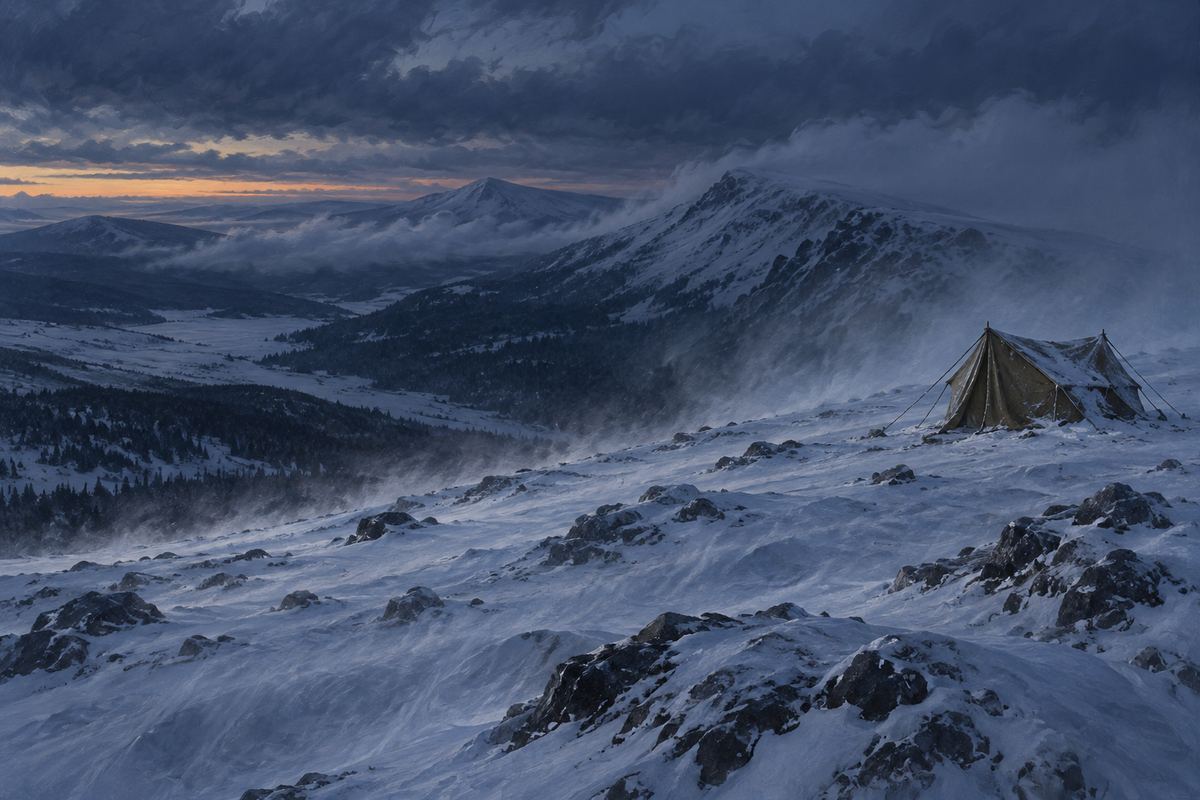
The campsite is the image that survives: a tent on a remote snow-covered slope, its occupants gone. In February 1959, nine members of Igor Dyatlov's expedition died in the northern Urals. The circumstances resisted an easy account, particularly the abandonment of shelter and some of the injuries. In the long space between evidence and explanation, the mountain acquired stories of secret weapons, attackers and forces beyond ordinary understanding.
Following the trail
Researchers at ETH Zurich and EPFL modeled a delayed slab avalanche. Their work suggests that a cut made to pitch the tent, local terrain and wind-deposited snow could combine to release a slab hours later. Simulations also investigated how snow impacts could cause severe injuries. This is a plausible mechanism consistent with important evidence, rather than a recording of every action or a definitive reconstruction of all nine deaths.
Why it stays with us
The unsettling question is practical: what could make experienced travelers leave their best shelter? A physical explanation can answer part of it without giving the night back in full. The remaining uncertainty belongs to a tragedy involving real people; it is not positive evidence for the most elaborate story that can be placed on the slope.