U225X / STRANGE FILES
Tarawera’s Phantom Canoe in Daylight
Lake Tarawera, Aotearoa New Zealand / Reported on 31 May 1886, before the June eruption
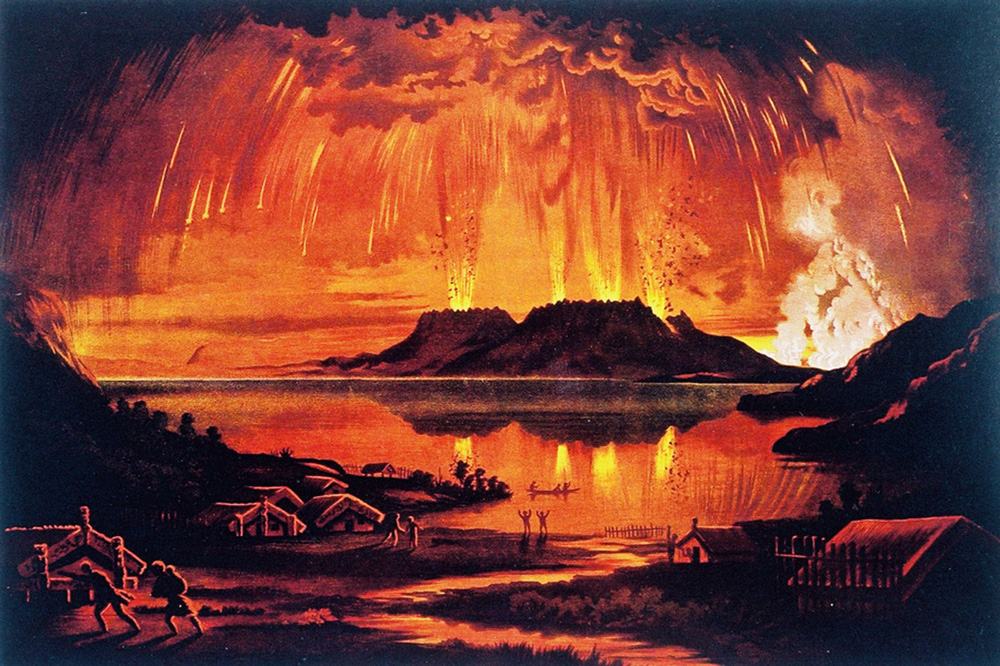
A canoe was reportedly seen crossing Lake Tarawera shortly before the eruption of 1886. The famous painted version adds moonlight, but the account belongs to broad daylight instead.
A recorded story, with its history attached
The account
Before Mount Tarawera erupted, a canoe crossed the lake in an account remembered by Māori and Pākehā visitors. Guide Sophia was among those who reported it. The waka was interpreted as a phantom, and the tohunga Tūhoto Ariki understood it as an ominous sign. Then, on 10 June 1886, the mountain erupted, devastating communities and the landscape that tourists had come to see. The later disaster gives the earlier crossing its terrible weight. The later catastrophe gave the earlier sighting a lasting place in accounts of warning and prophecy.
Following the trail
New Zealand’s Ministry for Culture and Heritage recounts the report and the interpretation. Te Ara dates the sighting to 31 May and makes a precise correction to Kennett Watkins’s famous painting: the reported encounter happened in broad daylight, despite the artist’s dramatic moonlight. The eruption is documented; the canoe’s supernatural status remains the account’s interpretation.
Why it stays with us
Daylight makes the story more distinctive, not less. It removes the convenient cover of darkness and reminds us how strongly a painting can rewrite the atmosphere of a remembered event without changing its familiar title.