The Wrong Afternoon at Versailles
Two visitors to the Petit Trianon later described strange costumes, oppressive stillness and a woman one identified with Marie Antoinette. Their own book preserves both agreement and differences.
The account
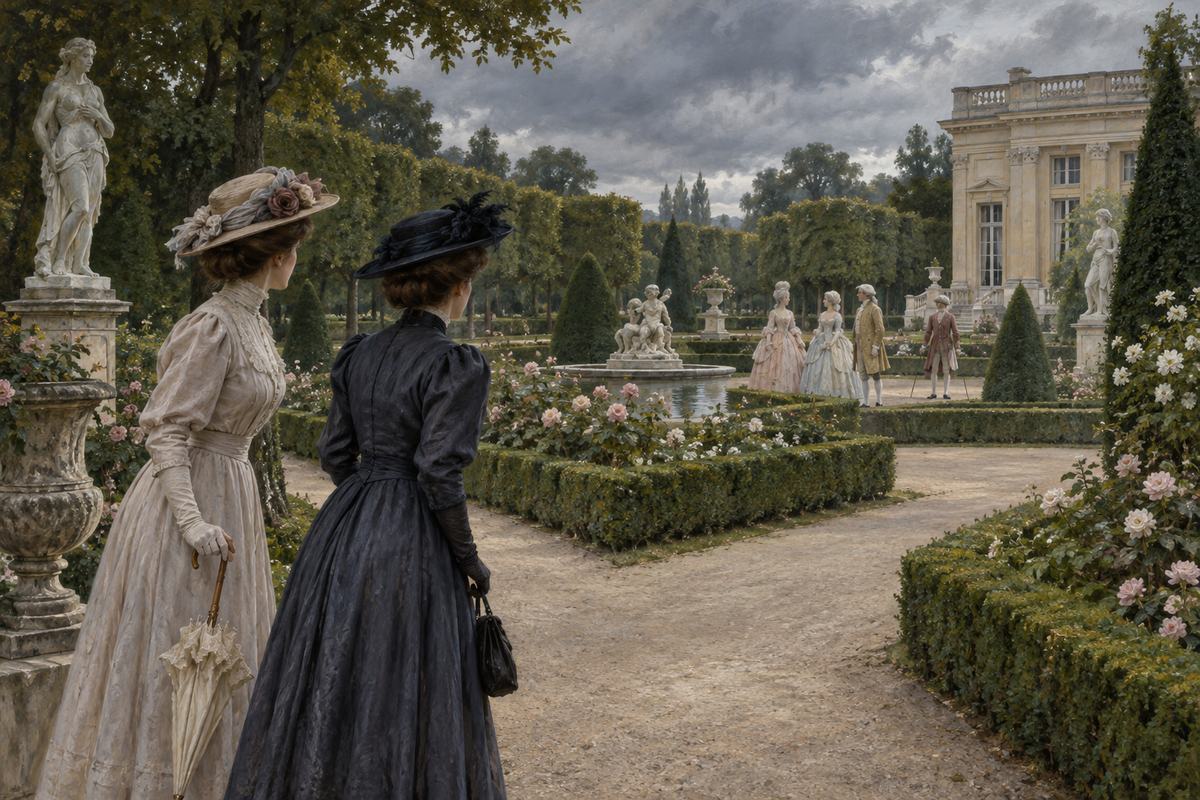
In August 1901, Charlotte Moberly and Eleanor Jourdain went looking for the Petit Trianon. Their later account describes oddly dressed figures and an increasing sense that the gardens were wrong. Moberly remembered trees becoming flat and lifeless, and a seated woman she later associated with Marie Antoinette. Jourdain did not see that woman. The scene is disturbing because the alleged haunting does not announce itself with transparent bodies. It initially looks like a confusing afternoon among people whose clothes, manner and surroundings seem difficult to place.
Following the trail
Their book An Adventure appeared in 1911 under the names Elizabeth Morison and Frances Lamont. It prints separate accounts, discussions and subsequent investigations. Those pages are direct evidence of what the authors reported and came to believe. They also show the interpretation developing after the visit, including conversations about the date and the queen. That distinction matters when later summaries present the experience as a single, instantly understood event.
Why it stays with us
Read together, the two accounts leave gaps between their observers. Those gaps make the original more interesting than a polished tale in which every witness sees exactly the same ghost.