The Noises After Huntly’s Earl Died
An early account of Huntly Castle describes illness, terror and noises from an empty chamber after an earl’s death, carrying sixteenth-century fear through a surviving written record.
The account
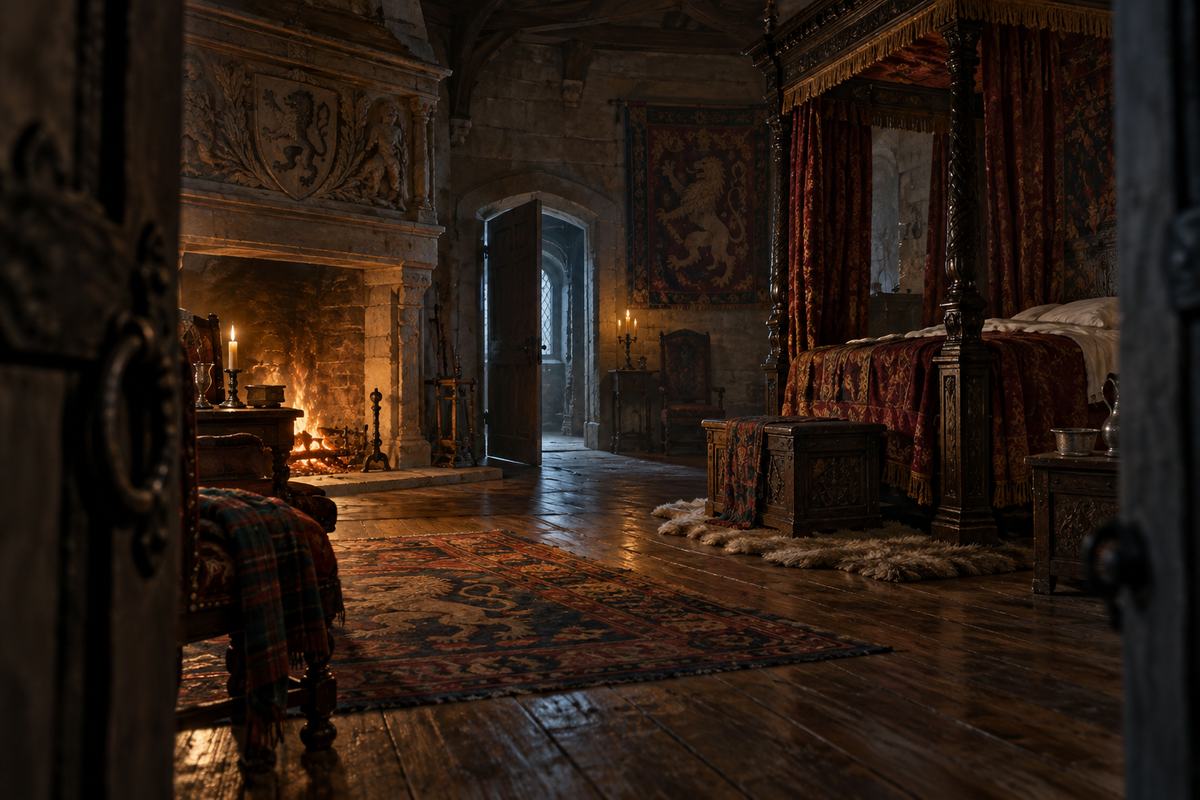
After George Gordon, fifth Earl of Huntly, died in 1576, the account preserved by Richard Bannatyne describes a household shaken by more than bereavement. Men reportedly suffered violent chills and terror, then recovered. Bangs, groans and voices were associated with the dead earl’s empty chamber. The story does not depend on a conveniently photographed face. Its disturbance is harder to place: something seems to be happening inside a room whose occupant is gone, while the people outside struggle to understand what has happened to them.
Following the trail
Historic Environment Scotland examines the manuscript tradition, which was published by Robert Pitcairn in 1836. Bannatyne was a contemporary, but his information passed through other people. The heritage body also notes his Protestant background and possible hostility toward the Catholic Gordons. Those are specific reasons to read the account carefully, rather than treating age as a guarantee of accuracy.
Why it stays with us
This is valuable because the haunting has a surviving paper trail. The document carries rumours, religious tensions and the fear surrounding an unexpected death together. Its historical importance remains even when the noises themselves cannot be recovered.