Thylacine After Extinction
The thylacine was a real animal before it became a story about possible survival. Its stripes remain in photographs and preserved specimens, while later sightings carry a different and unresolved burden.
The account
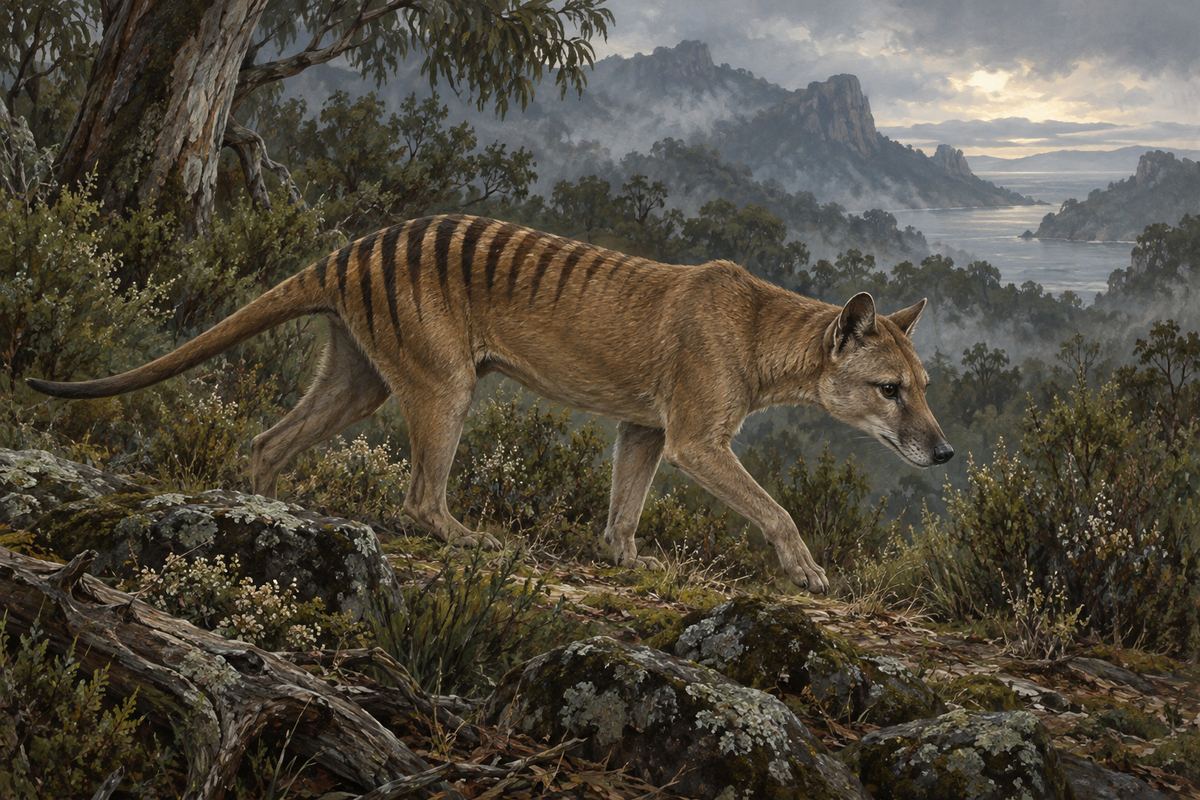
The last known captive thylacine died at Hobart’s Beaumaris Zoo on September 7, 1936. Protected status had arrived only weeks earlier. The striped marsupial had already been pursued through years of bounties, hunting and habitat change. Afterward, searchers continued looking in Tasmania, and people continued reporting that they had seen one. Unlike a creature assembled entirely from rumor, the animal they hoped to find had a documented body: a stiff tail, dog-like head and dark bands across its back.
Following the trail
The National Museum of Australia preserves specimens and the history of the species’ loss. It reports no conclusive evidence that the thylacine survives and notes its official extinction status. The same source corrects a familiar detail: researchers found that the last zoo animal was not the male called Benjamin of popular retellings. Historical photographs prove living thylacines existed when photographed; they cannot authenticate a much later roadside sighting.
Why it stays with us
The unease here comes from possibility tangled with regret. Finding an unknown animal would enlarge the world; finding a living thylacine would seem to return something people helped remove from it. That difference gives even an uncertain glimpse an emotional weight that evidence still has to carry.