Kongamato
Kongamato reached print through an account of a dangerous winged creature in southern Africa. The famous pterosaur identification depends on a conversation and a picture, not a recovered animal.
The account
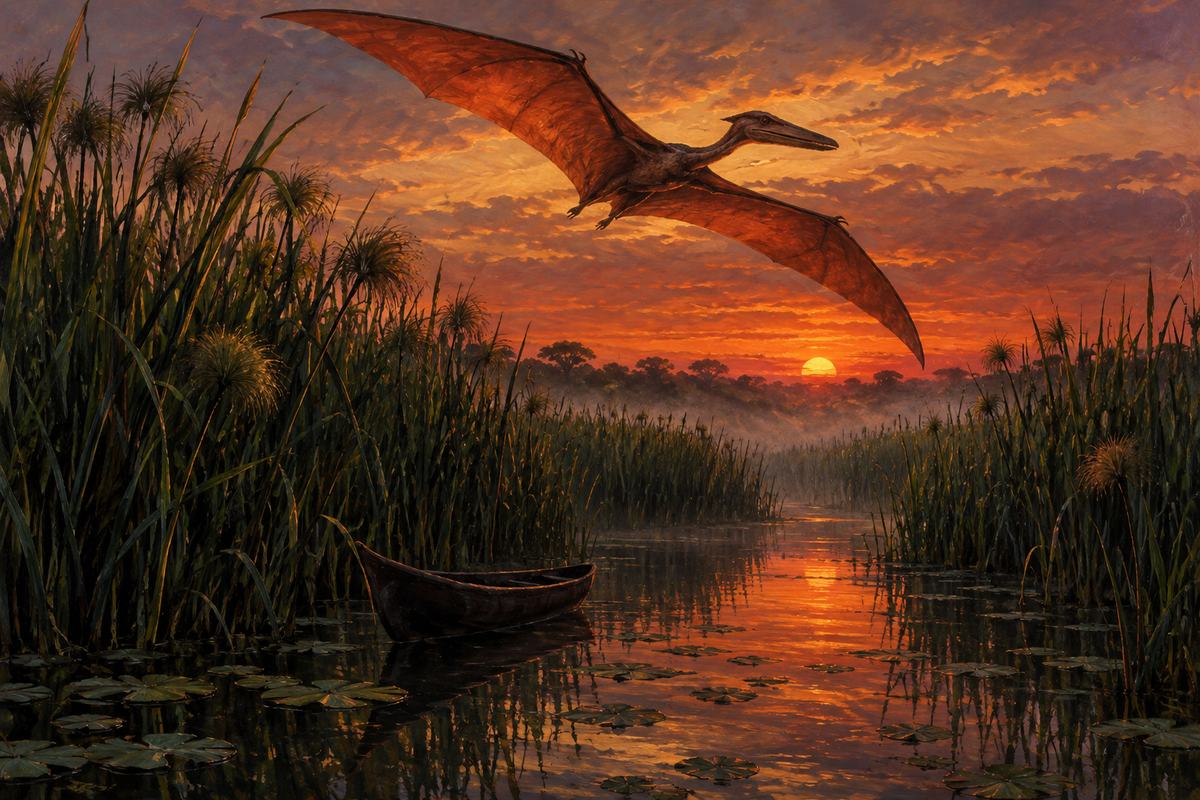
In his 1923 book In Witch-Bound Africa, Frank Melland described what Kaonde informants told him about Kongamato near the Jiundu swamps. The creature was associated with danger to boats and described as winged, reddish and unlike an ordinary bird. Melland reported that people recognized it in a picture of a pterosaur. That moment became central to later claims that a prehistoric flying reptile might still occupy the wetlands. A translated conversation acquired the force of an identification.
Following the trail
The referenced historical overview preserves Melland’s account and later retellings, but no authenticated specimen follows from it. Showing an illustration does not test whether different speakers understand a creature in the same way. The account also passed through a colonial observer’s choices about language, belief and natural history. Later reports from other locations should not be silently joined into one continuous population or one unchanged local tradition.
Why it stays with us
This file turns on the unsettling power of a matching picture. Once a listener points to a familiar outline, uncertainty can appear to vanish. Yet the important questions remain outside the frame: what was asked, what was meant, and which parts of the story the image could never show.