U225X / STRANGE FILES
Bigfoot
Pacific Northwest, USA / Modern publicity from 1958; famous film made in 1967
Northern California footprints and a brief film gave an elusive forest figure a worldwide audience. The enduring question is what those traces actually show beneath the legend.
Documented claims; no confirmed species
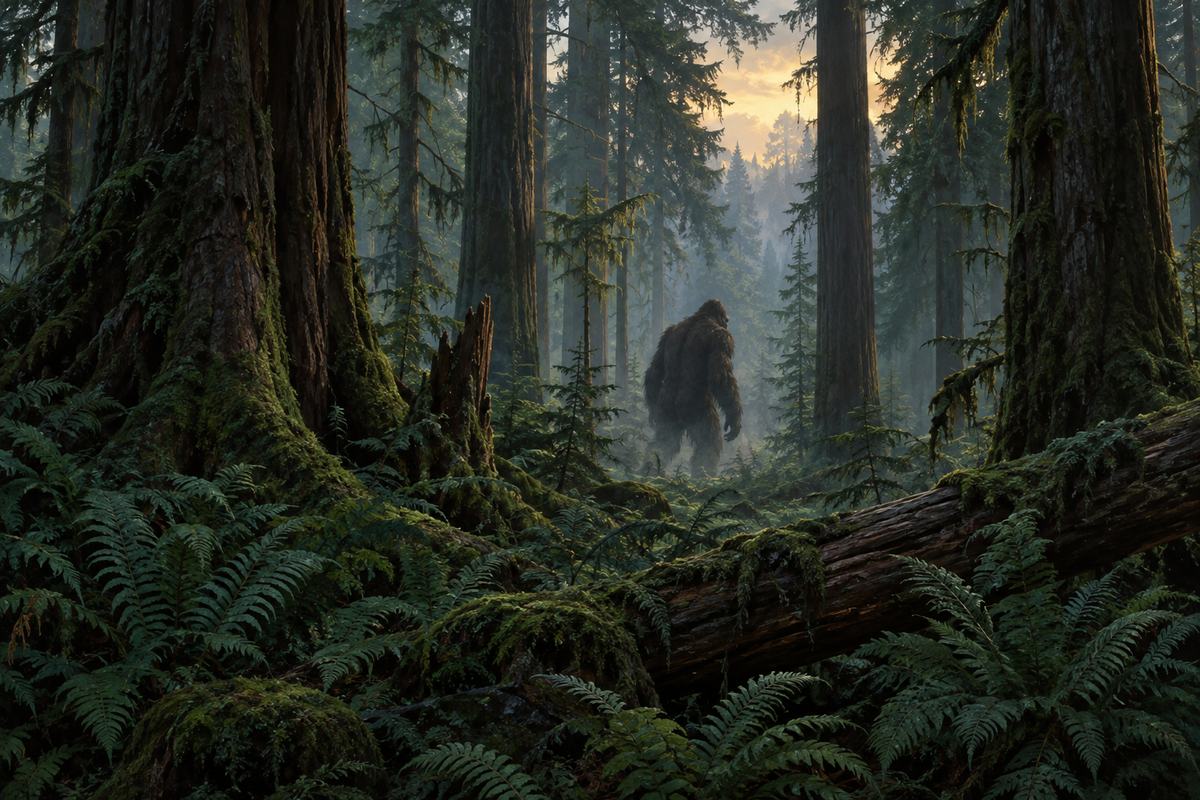
The account
In 1958, enormous footprints beside a Northern California road project reached the Humboldt Times. Nine years later, Roger Patterson and Bob Gimlin filmed a hairy, upright figure beside Bluff Creek. The subject crosses the clearing, turns toward the camera, and keeps going. That short sequence became the image around which generations of arguments gathered. The creature seems always to be leaving just as somebody notices it.
Following the trail
The 1958 tracks and the 1967 film are separate pieces of evidence. Ray Wallace’s family said after his death that he manufactured the earlier footprints. The film remains disputed; it has not established an unknown species. Arizona State Museum preserves casts and examines the history of the search, demonstrating that an authentic artifact can document a claim without validating the animal behind it.
Why it stays with us
Bigfoot’s strongest setting is the boundary between a road and a forest: the place human access ends while the landscape continues. Its surviving evidence asks a precise, uncomfortable question. How much can a moving silhouette or a plaster impression tell us when the creature itself is unavailable?