U225X / STRANGE FILES
The Bull of Heaven: Thirst That Emptied the River
Sumerian tradition; Uruk, southern Mesopotamia / An early fragment dates to the Third Dynasty of Ur, around the 21st century BCE; fuller later copies
Inanna brings the Bull of Heaven against Gilgamesh, and its appetite devastates Uruk's landscape. The Sumerian poem turns pasture, water and urban survival into the stakes of a divine confrontation.
Ancient Sumerian myth with an Ur III fragment and later manuscript versions
The account
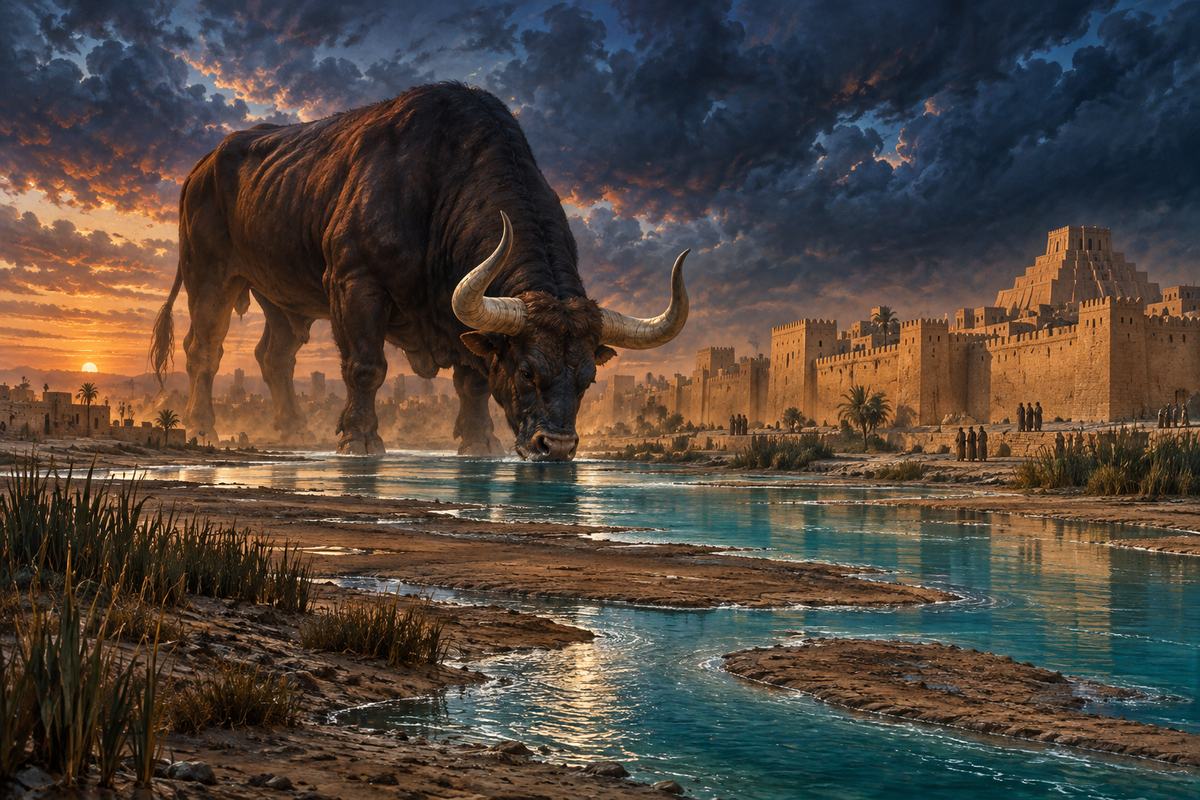
The bull's pasture belongs on the horizon, but Inanna demands that it be brought down against Gilgamesh. When it reaches Uruk, ordinary resources become impossibly small. It strips the grazing land and drinks the river in immense gulps, still unsatisfied. Gilgamesh and Enkidu confront it amid the damage. In the surviving poem, the defeated animal's body is divided, and its horns become vessels for offerings. Cosmic violence is brought back into the city's material life.
Following the trail
Oxford's edition presents several damaged Sumerian versions and an earlier fragment from Nippur dated to the Third Dynasty of Ur, around the end of the third millennium BCE. Fuller manuscripts preserve the destructive appetite and combat. This account is distinct from the related episode in later Akkadian Gilgamesh literature; details should not be freely blended between them. The tablets document an old mythic narrative, not remains or eyewitness records of an enormous celestial animal.
Why it stays with us
The terror is ecological before it is personal. Water, trees and pasture disappear under the demands of one creature, making divine anger visible through a city's dependence on its surroundings. The story's surviving fragments also remind us that its enormous scale reaches us in small pieces, copied and broken long after the first telling.