U225X / STRANGE FILES
Inanna's Descent: Seven Gates, Nothing Left to Wear
Sumerian tradition; southern Mesopotamia / Old Babylonian manuscript witnesses, approximately 1900–1600 BCE
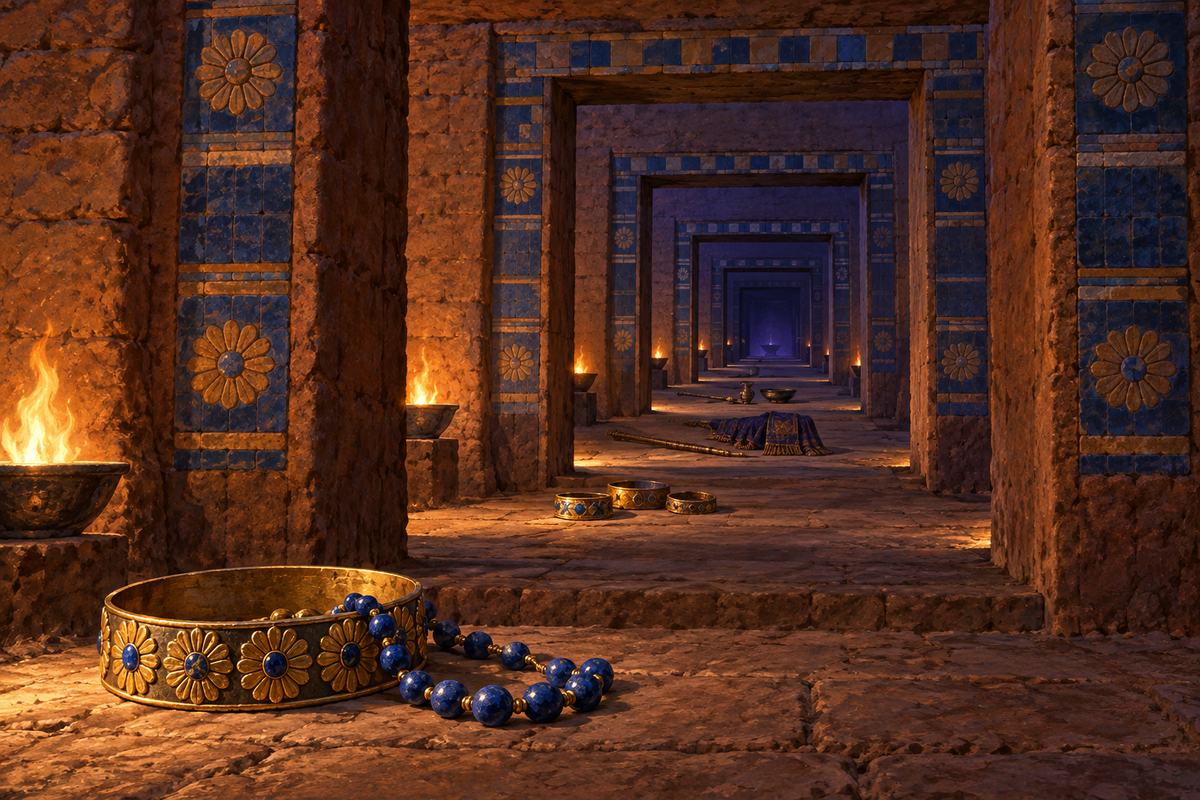
Inanna passes through seven gates, surrendering her regalia until her divine status offers no protection. The Sumerian descent narrative makes return from the dead possible only at a continuing cost.
Ancient Sumerian religious narrative; surviving manuscript witnesses
The account
Inanna approaches the underworld carrying the signs of her power. At each of seven gates, something is taken from her. By the end, the goddess who entered adorned must face judgment without those protections. She becomes a corpse suspended on a hook. Her attendant seeks help, and Enki's messengers eventually restore her. Yet the ascent has another condition: the world below demands someone to take her place.
Following the trail
Oxford's Electronic Text Corpus of Sumerian Literature translates the descent from surviving tablets, showing manuscript variants and gaps. An identified Nippur witness, P268913, belongs to the Old Babylonian period, approximately 1900–1600 BCE. Those copies provide a secure ancient textual setting without fixing the story's first composition. This Sumerian version should also be distinguished from related Akkadian traditions about Ishtar. Its gates, judgment and restoration are elements of a religious narrative, rather than archaeological evidence of a physical entrance to the afterlife.
Why it stays with us
Each threshold reduces the traveler before the final confrontation. The repeated loss makes the journey feel deliberate and inescapable, as though the destination has been dismantling her from the first step. Rescue does not cancel its laws. That continuing obligation gives the return an unsettling weight: coming back to life does not necessarily mean leaving death behind.