Setne and the Book of Thoth: Knowledge Kept with the Dead
Setne seeks a book attributed to Thoth inside a tomb. The dead recount what its earlier theft cost them, but the promise of forbidden knowledge proves harder to resist than their warning.
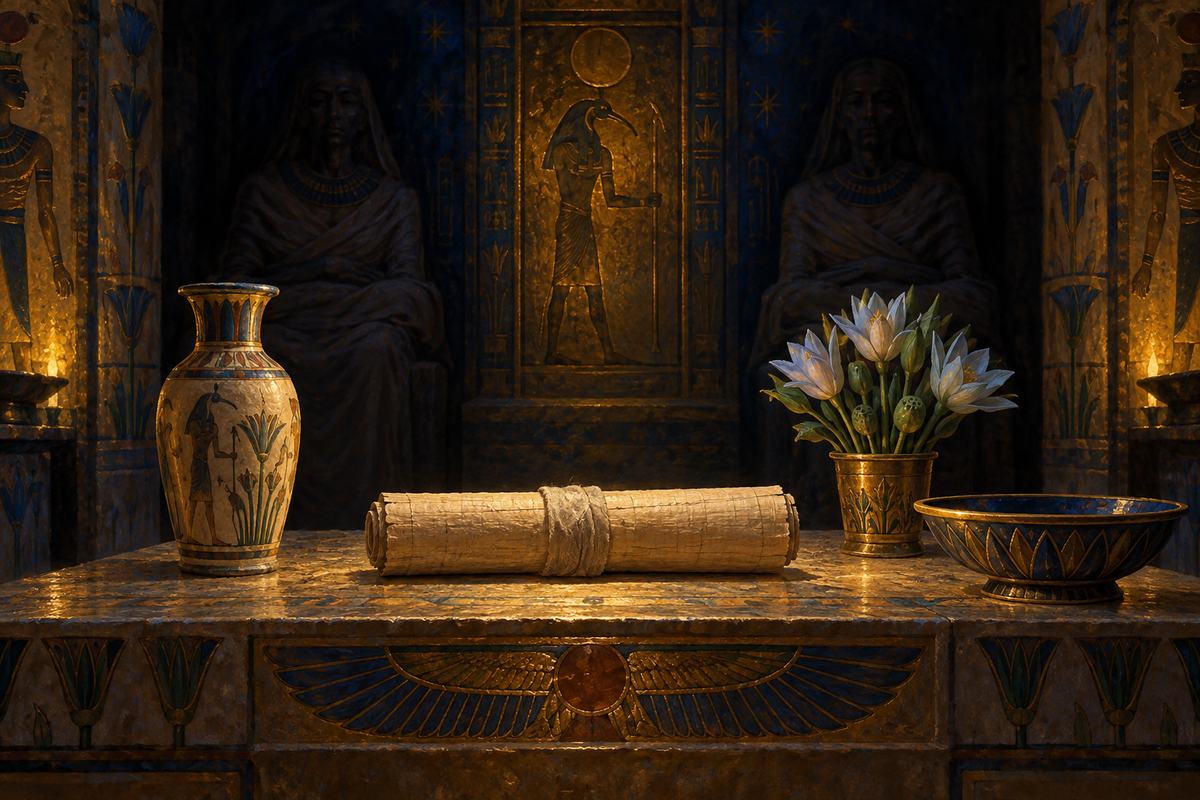
The account
The book is already lying with the dead when Setne comes for it. In the Demotic tale, the spirit Ahura explains how her family obtained the writing of Thoth and paid with their lives. Its power promises extraordinary knowledge of the world. Her account should be enough to stop another reader. Instead, Setne takes the book, and a sequence of humiliation and terror eventually drives him to restore it and help reunite the dead.
Following the trail
The main surviving manuscript belongs to the Ptolemaic period, centuries after the historical prince Khaemwaset, son of Ramesses II, on whom Setne is based. UCL research distinguishes the historical figure from this later literary adventure. W. M. Flinders Petrie's published version identifies the beginning as lost, so its reconstructed opening must not be treated as preserved ancient wording. The Book of Thoth in this story is a fictional divine object, not an authenticated volume discovered with its advertised powers.
Why it stays with us
The warning comes from people who have already made the mistake. Yet the story understands why a scholar might still reach for the book: a boundary around knowledge can make it more desirable. Its deepest unease is the prospect that understanding everything outside oneself may offer no protection from one's own appetite.