U225X / STRANGE FILES
Khonsuemheb's Ghost: The Tomb That Had Been Forgotten
Thebes and Deir el-Medina, Egypt / Surviving ostracon dated 1292–1077 BCE
A priest meets a dead man whose neglected tomb has left him restless. Surviving Egyptian pottery fragments preserve a ghost story in which listening and care matter as much as fear.
Ancient ghost story preserved on dated ostraca; literary encounter
The account
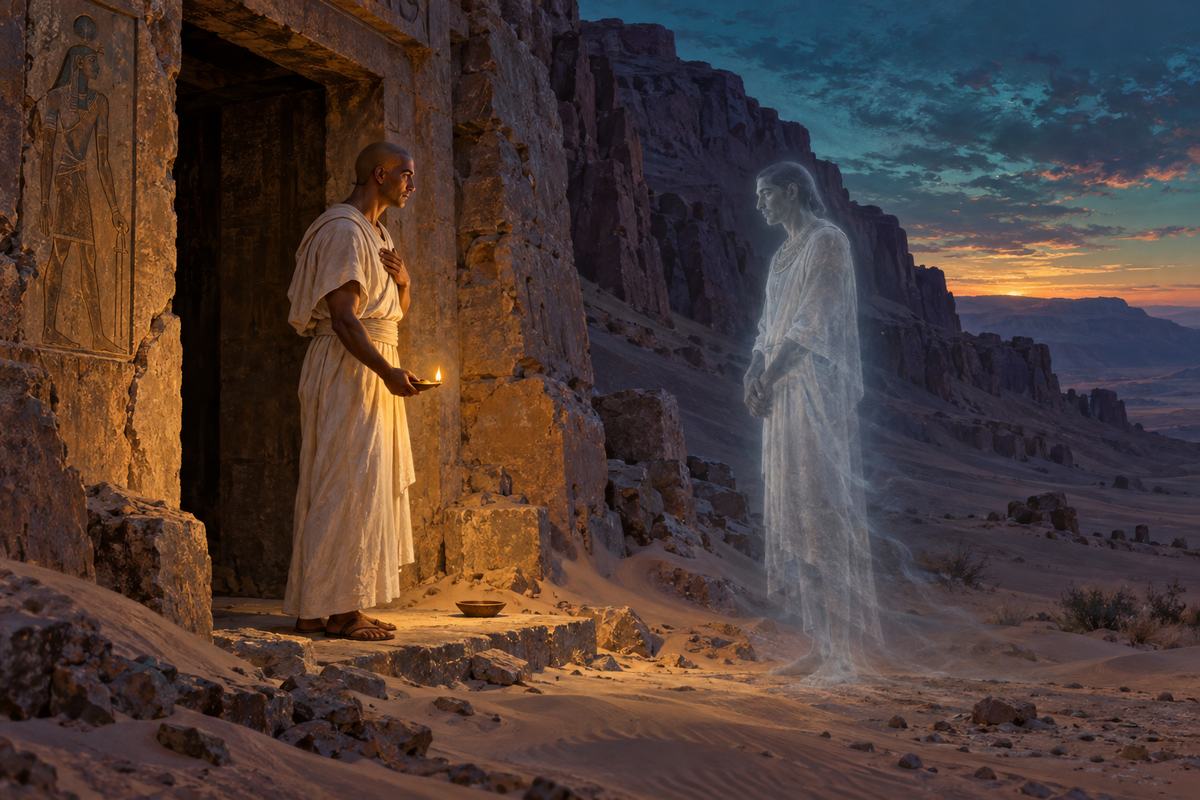
The spirit has a name and a grievance. In the surviving tale, the priest Khonsuemheb encounters a dead man who has been forgotten, deprived of offerings and left with a ruined tomb. A fragment preserves the priest's appeal for the spirit to appear and his offer to provide a proper burial and coffin. The encounter opens a conversation across the boundary of death, with the living asked to repair what neglect has damaged.
Following the trail
This story survives in pieces written on ostraca, fragments of pottery or stone used as writing surfaces. Turin's Museo Egizio dates its clay fragment S. 6619 to 1292–1077 BCE and records its excavation at Deir el-Medina in 1905. The Global Egyptian Museum provides a translation of a Vienna fragment; the Louvre also holds part of the tale. These are genuine ancient witnesses to a literary story. They do not establish that a historical ghost appeared.
Why it stays with us
The apparition asks for attention before it offers terror. That gives the tale an intimacy unlike a simple monster encounter: a dead person still has a history, a place and unmet needs. Its fragmented survival is fittingly poignant. The modern reader, too, encounters a voice that must be pieced together from things nearly lost.