U225X / STRANGE FILES
The Testament of Solomon: The King Who Questioned Demons
Greek-speaking eastern Mediterranean; legendary Jerusalem / Early material survives in a papyrus dated 401–600 CE; fuller recensions are medieval
A later text gives Solomon a ring with which to summon, question and compel demons. Its surviving manuscripts preserve changing magical traditions, rather than writings recovered from the biblical king's court.
Ancient and medieval pseudepigraphal text; supernatural events are narrative claims
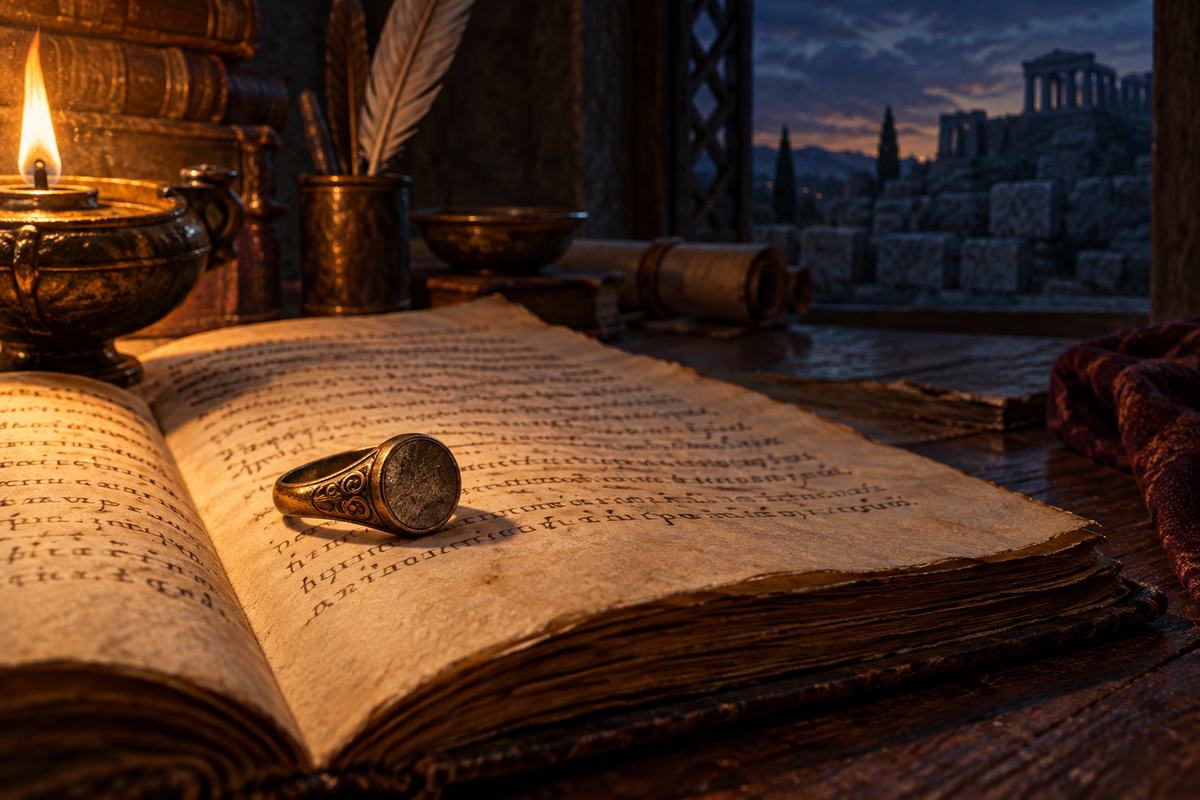
The account
A boy working around Solomon's Temple grows weaker as a demon takes his wages and drains his strength. In the Testament of Solomon, the king receives a ring through the archangel Michael and sends the boy back with an answer to his tormentor. Ornias is brought before Solomon. Other spirits follow, naming their powers, the injuries they inflict and the angels that restrain them. The Temple's construction becomes the setting for a procession of dangerous confessions.
Following the trail
This is a Greek work attributed to Solomon, not an authenticated royal memoir. Its complicated composition cannot be assigned one secure date. Würzburg's manuscript database dates a related Greek papyrus containing portions of chapter 18 to 401–600 CE; fuller versions survive in much later manuscripts. The narrative translated by F. C. Conybeare belongs to that evolving textual tradition. Ancient fragments establish antiquity for some material, not authorship by a king of the first millennium BCE.
Why it stays with us
The unsettling idea is that naming a danger might make it answerable. Each interrogation turns an unseen threat into a set of limits, yet the king's authority remains dependent on a power beyond himself. The manuscript history adds another mystery: how many generations reshaped the voices now speaking under Solomon's name?